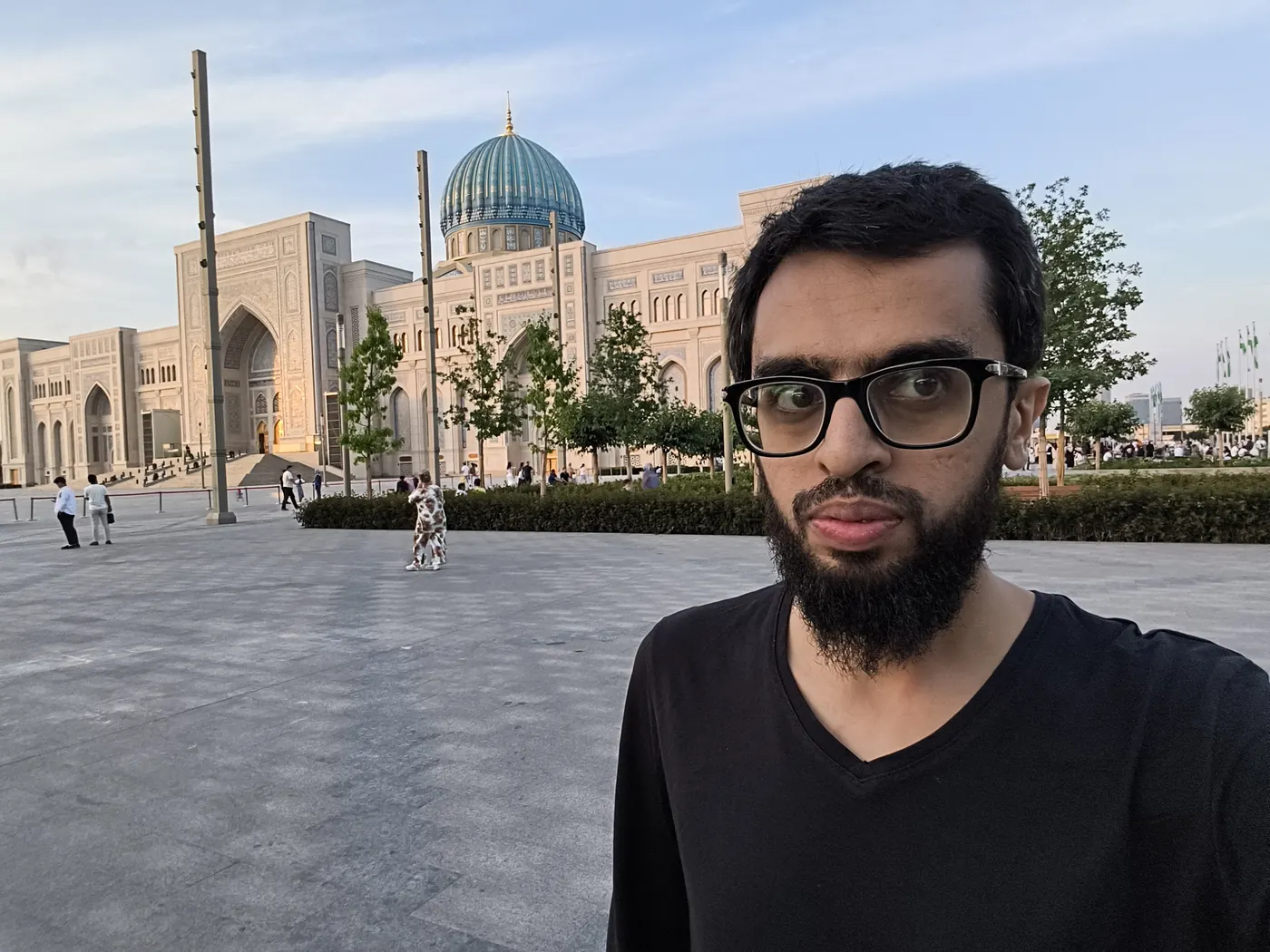
Most Pakistanis know Uzbekistan only as the country with the world's most beautiful mosques, the ancient Silk Road cities of Samarkand and Bukhara. What they do not know is that Uzbekistan right now is one of the fastest-growing economies in Central Asia and one of the most open for Pakistani entrepreneurs. There are direct flights from Lahore, a budget airline that makes the route genuinely affordable, 130 Pakistani joint ventures already operating on the ground, 24 special economic zones covering everything from pharmaceuticals to tech, and a currency so affordable that your costs are a fraction of what you would pay in Dubai or Istanbul. I went there, I took the cheapest flight I have ever had in my life, and I saw what is actually there. This is the full guide.
Visa Policy for Pakistanis
Pakistani passport holders cannot use the Uzbekistan e-visa portal. As of 2026, Pakistan is not included in Uzbekistan's e-visa eligible country list. You must apply through the Uzbekistan Embassy in Islamabad in person. This is an important point to plan around: the visa process requires time, a physical visit to the embassy and the right supporting documents before your trip.
The Uzbekistan e-visa system (e-visa.uz) does not accept Pakistani passports. Do not attempt to apply online. All Pakistani citizens must visit the Embassy of Uzbekistan, Islamabad or go through a registered travel agent handling embassy submissions. Plan at least 2 weeks ahead of your travel date to allow processing time.
- Location: Islamabad (the only Uzbekistan Embassy in Pakistan)
- Visa types: Tourist (B1), Business (B2), Student, Transit
- Processing time: Approximately 5–10 working days (confirm current timelines directly with the embassy)
- Validity: Typically 30 days, single entry for tourist visa
- Documents required: Passport (6 months validity), completed application form, passport photos, confirmed hotel booking or invitation letter, bank statement, travel itinerary
Prepare Your Documents
Gather your valid passport, recent passport-size photos, a completed Uzbekistan visa application form, confirmed hotel bookings or an official invitation letter, a copy of your return flight tickets and a recent bank statement showing sufficient funds for the trip.
Get an Invitation Letter (For Business Visa)
If you are applying for a Business visa, you need an official invitation letter from a registered Uzbek company or organisation. If your purpose is IT Park registration, IT Park Uzbekistan's One Stop Shop team can issue an official Invitation Letter once you submit your application. This letter is accepted by the embassy as a valid business purpose document.
Submit at the Embassy in Islamabad
Visit the Embassy of Uzbekistan in Islamabad with your full document set. Submit the application in person. Check current embassy operating hours before visiting as these can change. If you are based in Lahore, Karachi or another city, you may need to travel to Islamabad or use a registered visa agent to courier documents on your behalf.
Collect Your Visa
Once approved (typically 5–10 working days), collect your visa sticker from the embassy or arrange courier collection through your agent. Double-check the entry dates, number of entries and validity period before travelling. Carry printed copies of all supporting documents at the border.
If your purpose is to visit IT Park Uzbekistan and set up a company, contact IT Park's One Stop Shop at my.it-park.uz and submit your initial application before booking your flight. Once they confirm your application, they will issue an Invitation Letter. Take this to the embassy with your business visa application. It clearly documents your purpose and improves your chances of a smooth approval.
Getting There from Pakistan
This is where Uzbekistan stands apart from most Central Asian countries for Pakistanis. You do not need to connect through Dubai, Istanbul or any other hub. There are direct flights from Lahore to Tashkent, and more importantly there is now a budget airline on this exact route making it one of the most affordable international destinations reachable from Pakistan.
Direct Flights
Uzbekistan Airways: Lahore (LHE) to Tashkent (TAS)
The national carrier of Uzbekistan operating a direct route from Lahore to Tashkent. Full-service airline with baggage allowance and in-flight meal. Flight time approximately 3 hrs 30 min.
Centrum Air: Lahore (LHE) to Tashkent (TAS)
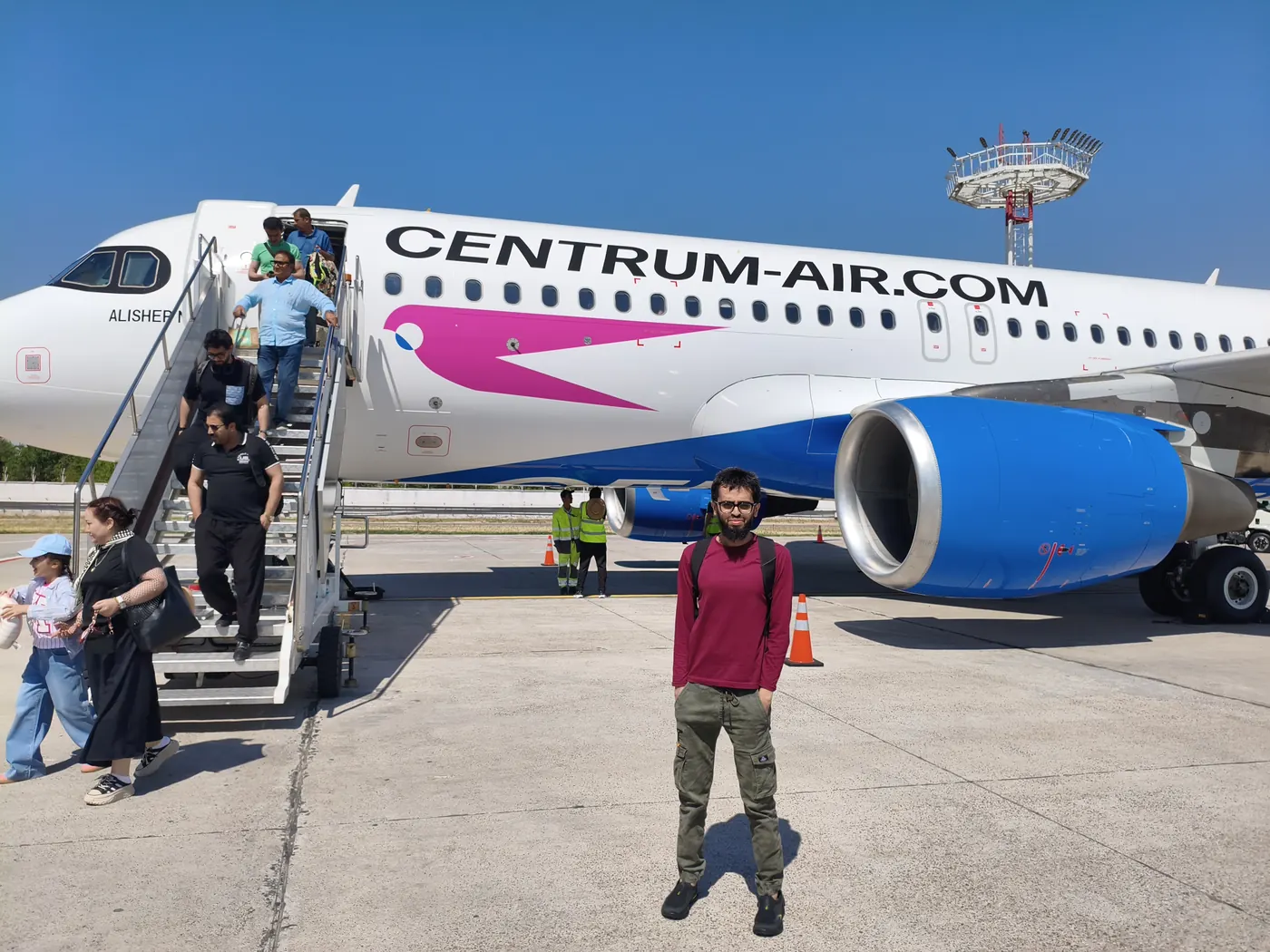
Uzbekistan's budget airline, offering significantly lower fares on the Lahore–Tashkent route. I flew Centrum Air and reviewed the experience on the channel. Basic but clean, good legroom in front rows, water served on board. For the price, genuinely impressive. Watch my Centrum Air review →
The budget option via Centrum Air is what changes everything. Before, flying from Pakistan to Central Asia required connecting via a Gulf carrier, adding hours and cost. Now a Pakistani can board a direct flight to Tashkent for a fraction of the price. It is the same story I told with my Samarkand–Tashkent flight: Centrum Air is genuinely affordable and genuinely decent.
My Centrum Air flight review. The budget airline that is quietly making Pakistan–Uzbekistan travel incredibly affordable.
Connecting Options
If direct flights are full, the cleanest connection is via Istanbul (Turkish Airlines), which has a strong network into Tashkent. Emirates via Dubai and flydubai also serve Tashkent. Total travel time via Istanbul is approximately 7–8 hours with a short layover.
Pakistan and Uzbekistan: A Rapidly Growing Partnership
The trade relationship between Pakistan and Uzbekistan has moved much faster than most people realise. Bilateral trade exceeded $400 million in 2024, and in just the first half of 2025 it hit $253.7 million a 123% year-on-year jump. By August 2025 Uzbekistan had officially become Pakistan's largest trading partner in all of Central Asia. Both governments have set a formal target of $2 billion in bilateral trade within five years.
130+ Pakistani Joint Ventures Already Operating
Over 130 Pakistani joint ventures are currently registered and operating in Uzbekistan in Tashkent, Namangan, Syrdarya and other regions. Named companies include Novugen Pharma, UP-Match, Pak-Merit Bleaching and Diamond Group, active in pharmaceuticals, textiles and manufacturing. This is not a market Pakistanis are discovering: they are already there, and the early movers have been profitable.
Preferential Trade Agreement (PTA)
A Preferential Trade Agreement between Pakistan and Uzbekistan has been in force since 2023 and currently covers 17 product categories, with negotiations actively underway to expand the list to 100. Pakistani exports benefiting from the PTA include pharmaceuticals, textiles, leather goods, agricultural commodities and surgical instruments. The Transit Trade Agreement signed in 2021 allows Uzbek goods to pass through Karachi Port, Port Qasim and Gwadar, opening a logistics corridor that works in both directions.
The sectors Uzbekistan's government has formally invited Pakistani businesses to enter include: construction materials, food processing, electrical equipment, chemicals and value-added textiles industries where Uzbekistan is actively modernising and where Pakistan has a competitive supply base. The Pakistan Business Council published a dedicated Uzbekistan Market Access 2025–26 report for Pakistani businesses, a signal that the business community on both sides is taking this corridor seriously.
Language Barrier and the Russian Reality
Here is something Pakistani visitors are often not prepared for: Uzbekistan spent 70 years under Soviet rule from 1924 to 1991. That left a deep imprint on the language, culture, architecture and business culture of the country. Understanding this is essential before you go.
The official language is Uzbek, a Turkic language that is completely different from Urdu, Arabic or Farsi. After independence in 1991, Uzbekistan switched its script from Cyrillic to the Latin alphabet: so today's young generation reads and writes Uzbek in Latin letters while older Uzbeks still use the Cyrillic version they grew up with. If you walk into a government building, a market, or a residential neighbourhood outside the Tashkent city centre, you will be speaking to people in Uzbek or Russian, not English.
Russian is the second language and arguably more useful than English for a business traveller who is going to spend time outside Tashkent's business district. Professionals aged 35 and above typically speak Russian as a first or equal language. Many business negotiations at small and medium enterprise level are conducted in Russian. Government bureaucracy at lower levels still functions largely in Russian or Uzbek, not English.
English will get you through Tashkent hotels, the IT Park, and formal business meetings. It will not get you through daily life: local markets, transport, bureaucracy, landlords, neighbourhood dealings. If you plan to live or operate in Uzbekistan long-term, basic Uzbek or Russian is not optional, it is essential. Consider hiring a local Uzbek assistant for your first business trip at minimum.
For Pakistani tourists, this is manageable: the warmth toward Pakistani visitors is genuine and people are helpful even without a shared language. For someone planning to establish a business or live there, budget serious time for language learning. The Pakistani professionals who have made it work in Uzbekistan consistently say the same thing: learning the language unlocked everything else.
Soviet Influence You Will See Everywhere
The Soviet era shaped Tashkent's urban layout: wide boulevards, large public squares, Soviet-style apartment blocks sitting next to gleaming new glass towers. Outside the old city quarters of Samarkand and Bukhara, much of what you see architecturally in Uzbek cities is Soviet. The metro system in Tashkent (one of the most beautiful in the world, with each station differently decorated) is a Soviet-era masterpiece. The industrial base, the technical university system, the railway infrastructure: all Soviet legacies. This is not a negative. It means Uzbekistan inherited real infrastructure that many developing countries lack.
The Currency Advantage
This is the part that surprises Pakistanis most when they first land. Uzbekistan uses the Uzbek Som (UZS) and the exchange rate is extraordinarily favorable. One US dollar exchanges for approximately 12,100–12,350 Uzbek Som (mid-2026 rate). At the current USD/PKR rate, this means one Pakistani rupee buys roughly 43–44 Uzbek Som.
What this translates to in practical terms: a full meal at a good local restaurant in Tashkent might cost 80,000–120,000 UZS. In Pakistani rupees, that is roughly 1,800–2,700 PKR. A decent hotel in central Tashkent runs 500,000–700,000 UZS per night, equivalent to approximately 11,000–16,000 PKR. If you are a Pakistani professional or entrepreneur with PKR income, you will find Uzbekistan genuinely, significantly affordable compared to Dubai, Turkey or even Malaysia.
- Currency: Uzbek Som (UZS). Notes come in large denominations (50,000 and 100,000 Som notes are common)
- ATMs: Widely available in Tashkent. Accept Visa and Mastercard
- USD exchange: USD can be exchanged at banks, exchange points and hotels across Uzbekistan
- Pakistani Rupees: Not exchangeable locally. Convert to USD before travelling
- Business payments: Larger transactions typically use USD or wire transfers. Local small business is cash-heavy in Som
For a Pakistani setting up a business operation in Uzbekistan, the cost structure is very different from what you would face in Dubai or even Baku. Salaries for qualified local staff, office rent, operational costs: all dramatically lower in USD or PKR terms. A software developer with good English and three years of experience in Tashkent can cost a fraction of what the same profile would demand in Dubai or even Lahore at current market rates.
The Big Cities Worth Knowing
Uzbekistan is not just Tashkent. It is a country of 37 million people spread across a diverse geography: from the industrial Fergana Valley in the east, to the ancient desert cities of the west, to the modern capital in the centre. Understanding the cities helps you understand where the business opportunities actually sit.
| City | Population | Known For | Business Angle |
|---|---|---|---|
| Tashkent | 2.5–3M | Capital, IT Park, Finance | Main business hub, IT companies, finance |
| Samarkand | ~600,000 | UNESCO Registan, Silk Road | Tourism, hospitality, F&B, export crafts |
| Bukhara | ~350,000 | UNESCO old city, medieval bazaars | Tourism infrastructure, traditional crafts trade |
| Namangan | ~500,000 | Fergana Valley, textiles, manufacturing | Textile production, industrial partnership |
| Andijan | ~450,000 | Fergana Valley, GM Uzbekistan auto plant | Auto parts, manufacturing, industrial supply |
| Nukus | ~350,000 | Karakalpakstan, Aral Sea region | Environmental tourism, unique market |
| Population figures approximate. Fergana Valley (Namangan, Andijan, Fergana city) is Uzbekistan's most densely populated and industrially active region. | |||
For most Pakistani entrepreneurs the entry point is Tashkent: that is where the IT Park is, where the international business community operates, where the flights land and where the banking infrastructure is concentrated. But Samarkand is increasingly a second base as tourism infrastructure expands dramatically around its UNESCO heritage sites.
Tourism: The Silk Road Is Booming
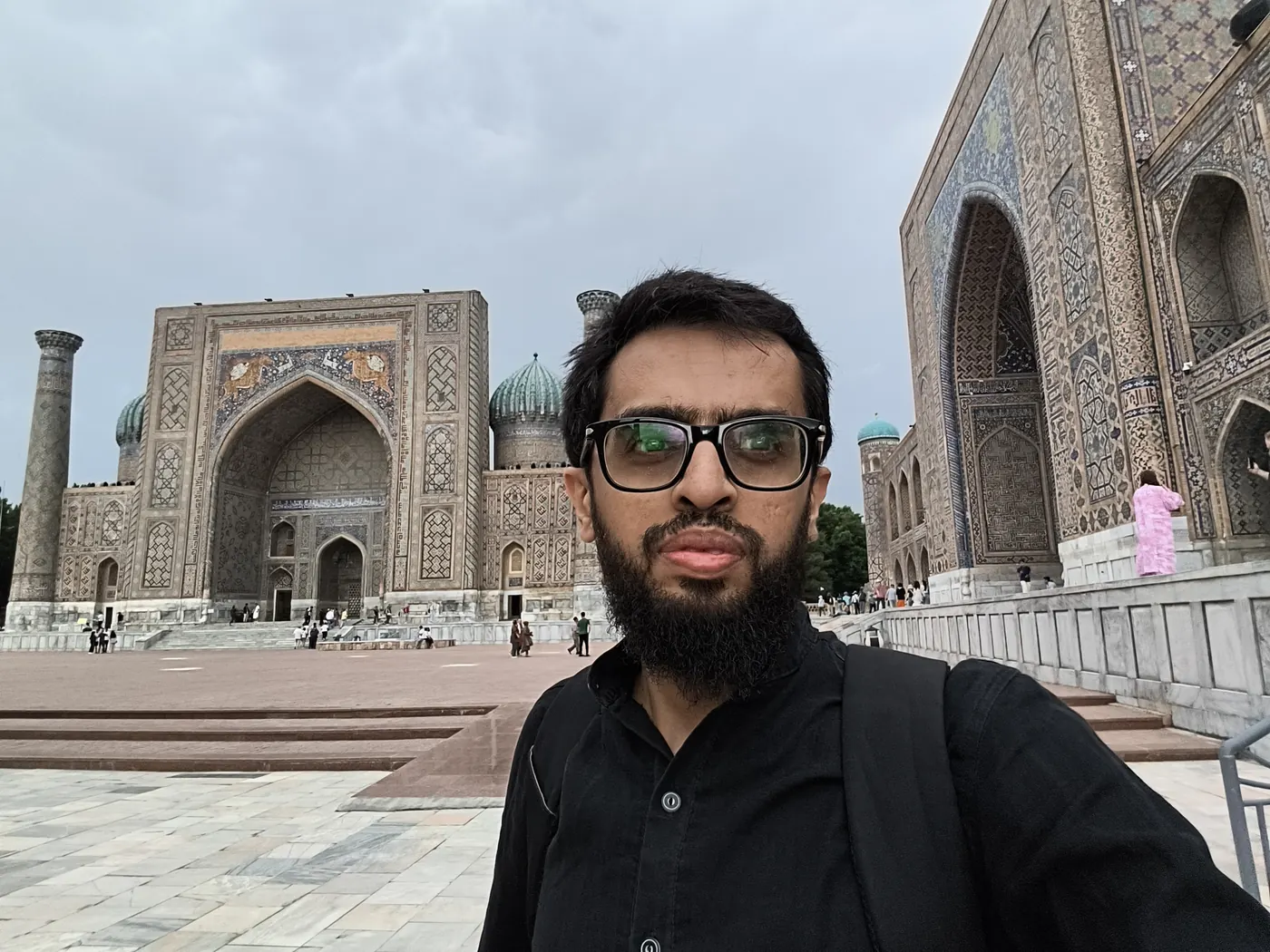
Tourism is one of the most underrated economic stories in Uzbekistan right now. The country has six UNESCO World Heritage Sites and sits at the heart of the historic Silk Road, the ancient trade network that connected China to Europe through Central Asia. Samarkand's Registan, the old city of Bukhara, the walled fortress of Khiva, the ancient ruins of Shahrisabz: these are genuinely world-class heritage destinations that most Western tourists have not yet discovered at scale.
Pakistani travellers have started going to Uzbekistan for exactly this reason. The combination of Muslim-majority country, halal food everywhere, staggering Islamic architecture and very affordable costs makes it a natural fit for Pakistani and South Asian tourists. Travel agencies in Lahore and Karachi are now actively marketing Uzbekistan packages, and the numbers are growing every season.
The tourism opportunity for a Pakistani entrepreneur is very specific: there is almost no Urdu-speaking hospitality infrastructure in Uzbekistan. No Pakistani-run travel agency operating from within the country. Very few Pakistani restaurants. No Urdu tour guides at Samarkand or Bukhara. The South Asian tourist market is growing, and the service layer that this market needs does not yet exist. That is a gap. A well-run Urdu-speaking travel desk, a Pakistani halal restaurant in the Samarkand old city, a hospitality operation targeting South Asian visitors: these are underserved niches right now.
Pakistani Students and Community
One of the lesser-known facts about Uzbekistan is that it has been hosting Pakistani students for years, largely under the radar. The primary draw is the medical university system: Uzbekistan has several medical universities that offer MBBS programmes in English at tuition fees far below what Pakistani private medical colleges charge. For families who cannot afford private medical education in Pakistan and whose children did not get into government colleges, Uzbekistan has become a genuine alternative.
Beyond medical students, there are Pakistani students in engineering, IT, business and economics programmes across Tashkent's universities. The total number of Pakistani students enrolled across Uzbek universities runs into several hundred, with the number growing each year as more Pakistani families become aware of the option.
- MBBS tuition fees: significantly lower than Pakistani private medical colleges
- Muslim-majority country: halal food, mosques, culturally comfortable environment
- Degree recognition: Uzbek medical degrees are recognised by the Pakistan Medical Commission (PMC) subject to clearing the required examinations on return
- Living costs: very affordable in Som terms for families sending money in USD or PKR
- English-medium programmes: many programmes offered in English, reducing the language barrier for first-year students
The broader Pakistani community in Uzbekistan is small but established. It consists of students, a small number of business professionals working in trade and IT, and some long-term residents who arrived years ago and built their lives there. Unlike in Baku or Dubai, there is no large settled Pakistani community with mosques, Pakistani restaurants and formal community organisations. The community is dispersed and informal. For a newcomer, finding fellow Pakistanis requires some effort, though university students tend to form their own informal networks.
Every time I have visited Uzbekistan, I have noticed more Pakistanis than I expected, particularly in Tashkent and around the tourist areas of Samarkand. The numbers are growing visibly. Pakistani travellers who were previously only going to Turkey, Malaysia or Thailand are starting to include Uzbekistan in their itineraries, and some are staying for business exploration. The wave is early. That is why now is the right time to look at it seriously.
Real Business Opportunities
Based on what I have seen on the ground, what the IT Park document reveals about incentives, and what Uzbekistan's economic trajectory looks like, these are the sectors where a Pakistani entrepreneur or investor has a genuine opening right now.
IT & Software Outsourcing
IT Park Uzbekistan offers significant tax exemptions for technology companies, including a 0% corporate tax exemption currently running to January 2028. Over 3,400 member companies are active, with 970+ having foreign capital. Pakistani IT firms offering software, mobile apps, fintech and BPO services can register a subsidiary in Tashkent with very low tax burden. Cost-competitive, English-educated talent is available locally.
Textiles & Garments
Uzbekistan is one of the world's major cotton producers, and the Fergana Valley (Namangan, Andijan) is a historic textile manufacturing region. Pakistani textile expertise in garment manufacturing, dyeing, finishing and value-added processing can directly complement Uzbekistan's raw material base. Joint ventures with local manufacturers or establishing a processing unit targeting re-export are both viable models.
Halal Food & Restaurants
Uzbekistan is Muslim-majority and halal food is standard. But there is almost no Pakistani cuisine presence. As South Asian tourist numbers grow, a well-positioned Pakistani restaurant in Tashkent or Samarkand old city would serve a gap in the market. Pakistani spices, condiments and branded food products also have an import opportunity given the non-existent competition on Pakistani brands locally.
Tourism & Hospitality
With 6 UNESCO sites, rapidly growing inbound tourism and virtually no Urdu-speaking service infrastructure, a Pakistan-focused travel agency operating from within Uzbekistan is an obvious gap. Urdu tour guides, South Asian-focused tour packages, guesthouses catering to Pakistani and Indian visitors in Samarkand or Bukhara: all underserved niches in a fast-growing tourism market.
Pharmaceuticals
Pakistan's pharmaceutical industry exports competitively priced generic medicines globally. Uzbekistan's healthcare system, expanding rapidly under reform, imports significant volumes of pharmaceuticals. Pakistani pharma companies with WHO-GMP certification can enter this market through local distributors, joint ventures or direct registration with Uzbekistan's drug regulatory authority. The low currency makes Pakistani products price-competitive.
Construction & Building Materials
Uzbekistan is building at enormous scale: new residential complexes, infrastructure projects, tourism facilities and industrial zones. Pakistani cement, tiles, sanitary fittings, steel products and construction services can find ready buyers. Pakistan already has a track record in construction across the Middle East and Central Asia: Uzbekistan is an underexplored extension of that corridor.
Agriculture & Food Processing
Uzbekistan is rich in fruit: apricots, pomegranates, grapes, melons and dried fruits of exceptional quality. Pakistan is a large consumer market for dried fruits currently imported from Afghanistan and Iran. A direct Pakistan–Uzbekistan dried fruit and agricultural trade channel, bypassing current routes, is an underdeveloped opportunity. Conversely, Pakistani rice, basmati and processed foods have an import market in Uzbekistan.
Education & Training
Pakistani educational technology companies and private institutions can explore partnerships with Uzbek universities or establish training centres targeting IT skills, English language proficiency and professional certification. The young population (median age 29) combined with strong demand for internationally recognised qualifications creates a real training market. EdTech is also an explicit allowed activity under IT Park registration.
Special Economic Zones: 24 Options, Not Just One
Uzbekistan has built one of the most extensive special economic zone systems in Central Asia. There are currently 24 large SEZs and over 742 smaller industrial zones with more than 4,000 registered companies. These are not all tech zones: they cover pharmaceuticals, agro-industry, manufacturing, logistics and tourism. SEZ industrial output exceeded $4 billion in 2023, with nearly $1 billion in exports. Understanding this landscape helps a Pakistani entrepreneur find the right entry point for their specific sector.
Types of Zones Available
All SEZ investors in Uzbekistan receive: full exemption from profit tax, property tax and land tax for the duration of their zone agreement; simplified customs procedures; investment protection guarantees under Uzbek law; and access to pre-built infrastructure. Foreign investors including Pakistanis are explicitly eligible to register companies in these zones.
Pakistan has a highly competitive pharmaceutical manufacturing sector. Uzbekistan has built dedicated pharma SEZs specifically to attract manufacturers: Nukus-pharm, Zomin-pharm, Boysun-pharm, Andijan-pharm and Parkent-pharm. These zones offer pre-installed utilities, lab infrastructure, and zero profit tax for the zone period. With the PTA reducing tariff barriers on Pakistani pharmaceuticals and Uzbekistan's healthcare system expanding rapidly, this is arguably the clearest direct match between Pakistani industrial capability and Uzbekistan's formal investment offer.
The official investment portal invest.miit.uz lists all active SEZs with available plots, infrastructure details and contact information. Before your first trip to Uzbekistan for business purposes, identify which zone matches your sector and reach out to the zone authority directly. Many zones have English-speaking investment facilitation officers.
IT Park Uzbekistan: Specifically for Tech Companies
Among all the special zones, IT Park Uzbekistan deserves its own section because it is the most structured and internationally recognised option for technology and software businesses. It has 3,400+ member companies, of which over 970 have foreign capital. It is genuinely active, well-administered and open to Pakistani-founded companies registered in Uzbekistan.
Some sources circulating online incorrectly state the IT Park tax exemption runs "until 2040." The accurate position: the 0% exemption on corporate income tax, VAT and social tax runs to January 1, 2028. The 2040 date applies only to the reduced 5% dividend withholding tax rate for non-resident founders (a separate, narrower benefit introduced in February 2025). Verify the current terms directly with IT Park before making investment decisions, as the legislative timeline may be extended or updated.
Current Tax Benefits for IT Park Members
Resident companies are exempt from corporate income tax, VAT, social tax and customs duties on imported equipment not produced in Uzbekistan (currently to January 2028). Employee personal income tax is reduced to 7.5% versus the standard 12%. Non-resident founders pay only 5% dividend withholding tax (versus standard 10%) through to 2040. No work permit is required for foreign specialists employed by a member company. Dividends and salaries for foreigners can be paid in foreign currency.
Who Qualifies and How to Apply
IT Park membership is for companies engaged in qualifying technology activities: software development, mobile and web applications, BPO and outsourcing for foreign clients, game development, e-learning, cybersecurity, IoT, fintech, web and graphic design, 3D animation and digital services. Pakistani IT firms offering software development, design studios and call centres targeting foreign clients all potentially qualify. The application is assessed by an Expert Board that reviews your business plan and revenue projections.
The registration process requires one physical visit to Uzbekistan to open a bank account. Total company formation cost is approximately $1,000 ($850 IT Park fee + $150 government fees), handled through the One Stop Shop at my.it-park.uz. For companies establishing outside Tashkent, IT Park's Zero Risk programme offers one year of free office space for firms meeting revenue or export thresholds. IT Park also has 14 branch offices across Uzbekistan for companies that want to be based outside the capital.
IT Park member companies can apply for an IT Visa for founders, investors and IT specialist employees: valid for up to 3 years, multiple entry, no work permit required, family members included. This is the most practical long-term stay option for a Pakistani tech entrepreneur wanting to base themselves in Uzbekistan. Processing takes approximately 3 months total (1 month for IT Card, then 2 months for visa). Apply at itvisa.uz.
Transport: The Afrosiyob Bullet Train and Beyond
One of the things that genuinely surprised me about Uzbekistan is the quality of its internal transport infrastructure. For a Central Asian country, the investment in connectivity is remarkable.
Afrosiyob High-Speed Rail
Uzbekistan operates the Afrosiyob high-speed train, manufactured by Spain's Talgo and running at up to 250 km/h. Current routes: Tashkent to Samarkand in 2 hours 8 minutes, Samarkand to Bukhara in 1 hour 12 minutes, making the full Tashkent–Bukhara journey approximately 3 hours 20 minutes. Fares run roughly €30–40 for economy class. A new Tashkent–Khiva high-speed service launched in May 2026, cutting a previously 14-hour journey to around 7 hours. For a Pakistani doing a business-and-tourism trip, the Afrosiyob makes it genuinely practical to see Samarkand and Bukhara in a single extended day-trip from Tashkent.
This train also matters for business: you do not need to fly domestically. Uzbekistan's major commercial cities are within a few hours of each other by rail, the trains are reliable and comfortable, and the Afrosiyob books up quickly during peak season so reserve 45 days in advance when possible.
Tashkent Metro
The Tashkent Metro is one of the most architecturally beautiful metro systems in the world. Each station was designed by a different Soviet-era architect and decorated with unique marble, mosaic, and ceramic artwork. Beyond its aesthetic value, it is a genuinely efficient way to move around the capital. Fares are extremely cheap: one ride costs 2,000–2,500 UZS (roughly 50 PKR). For a Pakistani in Tashkent for business, the metro is the fastest and most affordable way to travel between the IT Park, the city centre and business districts.
Road Transport and Taxis
Ride-hailing apps including Yandex Go (Russia's Uber equivalent, dominant across Central Asia and the CIS region) and Uklon operate extensively in Tashkent and other major cities. Ordering a taxi is simple, prices are shown upfront in Som, and the service is reliable. Intercity road travel is available via shared taxis (marshrutkas) for shorter routes or private hire for longer distances.
Professionalism and Business Culture
Uzbekistan under President Shavkat Mirziyoyev, who came to power in 2016, has undergone significant economic liberalisation and reform. The business registration process that used to take weeks now takes days. Corruption has been addressed more openly than before. Foreign investment procedures have been streamlined. The tone from the top has shifted toward creating a genuinely competitive environment for business.
At the IT Park level and in Tashkent's formal business community, professionalism is high. Meetings are structured, punctuality is respected, and English-speaking business professionals in the tech sector are well-educated and internationally aware. The IT community in particular is connected to global standards through platforms like Upwork, Fiverr and direct contracts with European and North American clients.
Outside the formal tech and finance sectors, business culture remains more relationship-driven and traditional in the Uzbek-Russian Central Asian manner. Trust is built over time, initial meetings are for getting to know each other rather than closing deals, and having a warm introduction through an existing contact carries significant weight. For Pakistani entrepreneurs, this is actually familiar territory: South Asian business culture shares many of the same values around relationship-building, hospitality and trust before transaction.
Treat your first visit to Uzbekistan as a relationship-building trip, not a deal-closing trip. Spend time at IT Park, attend any business networking events, visit potential partner firms and the Chamber of Commerce. The deals that Pakistani entrepreneurs have closed successfully in Uzbekistan almost universally started with a first visit that was about listening and learning rather than selling. Come back for the second trip with a specific proposal.
Average Wages in Uzbekistan
This is the number that matters most if you are thinking about setting up operations in Uzbekistan and hiring locally. Wages are significantly lower than Pakistan's major cities in dollar terms, which is one of the core reasons Pakistani and international businesses find Uzbekistan attractive as an operating base.
| Role / Sector | Monthly Salary (USD) | Monthly Salary (PKR approx.) | Notes |
|---|---|---|---|
| National average | ~$300–400 | ~85,000–112,000 | Across all sectors |
| Junior software developer | $400–700 | ~112,000–196,000 | English + 1–2 years experience |
| Mid-level IT / developer | $700–1,200 | ~196,000–336,000 | 3–5 years, working on foreign contracts |
| English-speaking office staff | $250–450 | ~70,000–126,000 | Admin, sales support, customer service |
| Factory / production worker | $150–250 | ~42,000–70,000 | Textile, manufacturing, food processing |
| Restaurant / hospitality staff | $150–300 | ~42,000–84,000 | Including tips in tourist areas |
| Government / public sector | $200–400 | ~56,000–112,000 | Lower end of professional pay scale |
| PKR conversion based on approximate mid-2026 rates. Salaries in Tashkent are generally 20–30% higher than other cities. IT sector wages have been rising fast due to demand from international remote work contracts. | |||
For a Pakistani entrepreneur planning to hire locally, the key takeaway is that qualified, English-speaking staff in Tashkent costs a fraction of comparable talent in Lahore or Karachi when measured in dollar terms. A fully staffed small office of 5–8 people: developer, accountant, office manager, sales and logistics: can be operational for a monthly wage bill of USD 3,000–5,000. That cost structure simply does not exist in Dubai, Malaysia or Turkey.
One important caveat: IT sector salaries in Tashkent have been rising rapidly as more international companies set up and Uzbek developers increasingly freelance on Upwork and Fiverr at international rates. The very affordable wage era for IT talent may not last indefinitely. For manufacturing and services outside the tech sector, wages remain very competitive compared to South Asia and the Gulf.
How Does Uzbekistan Compare to Pakistan in Size?
Uzbekistan covers 448,978 square kilometres: roughly half the size of Pakistan's 881,913 square kilometres. In population, it has approximately 37 million people compared to Pakistan's 240 million. It is the most populous country in Central Asia by a significant margin: Kazakhstan, Tajikistan, Turkmenistan and Kyrgyzstan all have smaller populations. This matters because Uzbekistan has the largest domestic consumer market in Central Asia.
Being landlocked is Uzbekistan's one geographic disadvantage: it is one of only two doubly landlocked countries in the world (surrounded entirely by landlocked countries). This makes sea-based trade complicated, requiring transshipment through Russia, Kazakhstan, Iran or China. For Pakistan, this is actually an opportunity: Pakistan's coastline at Karachi and Gwadar provides a potential sea access corridor for Central Asian trade, and there are active government-level discussions about Pakistani ports serving as Uzbekistan's gateway to the Indian Ocean and beyond.
Practical Things to Know Before You Go
Currency and Payments
Bring US Dollars and exchange to Uzbek Som on arrival. Exchange booths are available at the airport and throughout Tashkent. ATMs are plentiful in the capital but less reliable in smaller cities. Card payments are increasingly accepted in major hotels and restaurants but cash in Som remains essential for markets, transport and smaller businesses.
Language
Uzbek is the official language (written in Latin script). Russian is widely spoken by professionals and older generations. English is functional in the IT Park, upscale hotels and international business settings. Outside these contexts, a basic knowledge of Russian phrases or a reliable translation app is essential. Google Translate works offline with Uzbek and Russian language packs downloaded in advance.
Accommodation
Tashkent has a full range of accommodation from international business hotels (Hilton, Wyndham, Hyatt) to mid-range local hotels and guesthouses. Samarkand and Bukhara have excellent boutique guesthouses in historic buildings within the old city. Prices are substantially lower than comparable options in Dubai or Istanbul. A decent business hotel in Tashkent city centre runs USD 60–100 per night.
Food
Uzbek cuisine is halal by default. The national dish plov (rice cooked with lamb, carrots and spices) is available everywhere and genuinely excellent. Bread (non), kebabs, samsa (pastry filled with meat) and fresh salads are staples. Restaurants in Tashkent range from traditional Uzbek to Russian, Korean and increasingly international options. Pakistani food is virtually absent: something a Pakistani restaurateur could change.
SIM Card and Internet
Buy a local SIM card on arrival: Ucell, Beeline and UzMobile are the main providers. A local SIM with data costs around 50,000–100,000 UZS for a monthly package with generous data. 4G coverage is strong in Tashkent and other major cities. Internet speeds are good: important for the large remote-working and IT contractor community based there.
All foreign visitors must register with local authorities within 3 business days of arrival. If you are staying in a hotel, they register you automatically. If you are staying with a friend or in a private apartment, you or your host must register at the local migration office (OVIR). Failure to register can cause problems at the airport on departure. If you are using Airbnb or a rented apartment, confirm with your host that they will handle registration.
When you add it all together: a budget direct flight from Lahore that I personally took and reviewed, a currency that makes your costs dramatically lower, 130 Pakistani joint ventures already running proof that it works, 24 special economic zones including dedicated pharma and tech parks, 8.2 million tourists in 2024 heading toward a 15 million target, and 37 million people in the most populous Central Asian country with almost no Pakistani hospitality infrastructure serving them yet Uzbekistan is a serious destination for a Pakistani entrepreneur who is willing to go early.
The ones who look now will be ahead of those who look in three years. Uzbekistan is not a crowded market for Pakistanis. That is exactly the point.
Everything you have read in this article is based on my own research and personal experience of travelling to Uzbekistan. I have done my best to make the information as authentic and up to date as possible. However, situations on the ground visa rules, trade agreements, tax policies, wages, flight routes can change. Some things may already be different by the time you read this. Please verify any critical details, especially visa requirements and investment terms, through the relevant official sources or the embassy before making decisions. I am a traveller and content creator sharing what I have seen and learned, not a legal or financial advisor.