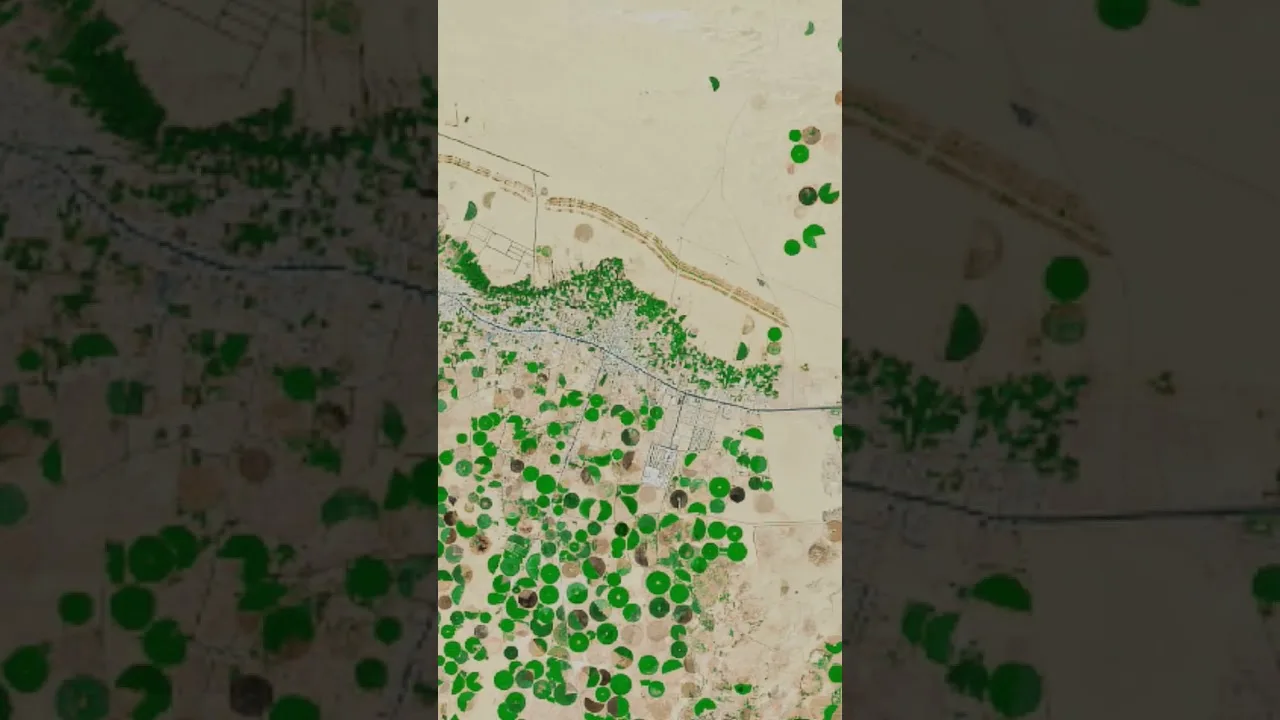
Flying over Saudi Arabia during the day, I saw something that made me press my face against the airplane window. Hundreds of bright green circles dotted the golden desert below. They looked like giant polka dots painted on the sand. I could not believe my eyes. How can anything green survive in one of the driest places on Earth? These circles tell a story of human determination. They show how Saudi Arabia turned impossible dreams into reality. This is modern engineering meeting ancient desert lands.
When Saudi Arabia Decided to Farm
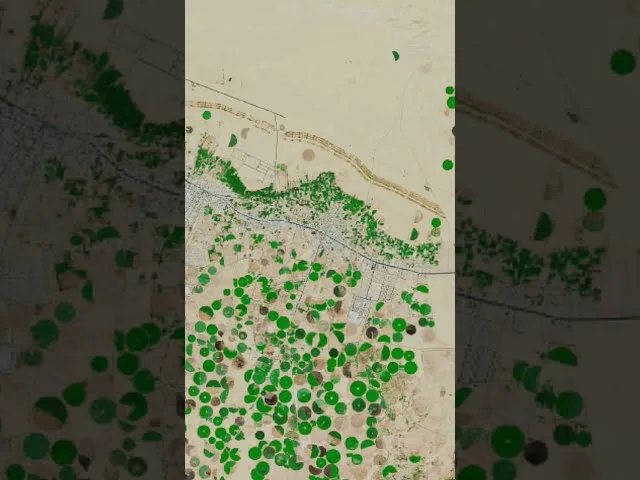
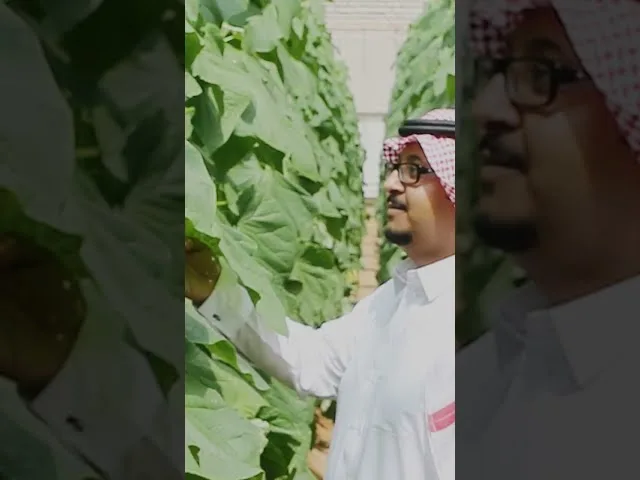
Saudi Arabia started its agricultural revolution in the 1970s. The government wanted to grow its own food. They did not want to depend only on imports. So they began drilling deep into the earth. They found ancient water hidden underground for thousands of years. This water is called fossil water. It fell as rain millions of years ago. Engineers brought in special machines from America. These machines are called center pivot irrigation systems. A long pipe rotates around a central point. It sprays water as it moves in a circle. That is why the farms are round. Each circle can be up to one kilometer wide. By the 1980s, Saudi Arabia was growing wheat in the desert. They even exported wheat to other countries. The kingdom became self sufficient in many crops. Farmers grew tomatoes, potatoes, and alfalfa. The green circles spread across regions like Al Jouf, Tabuk, and Wadi Al Dawasir. At one point, there were thousands of these circular farms. You can see them clearly on Google Earth. They look like green coins scattered on brown carpet. Today, the government has reduced wheat farming to save water. But many farms still operate. They grow fruits and vegetables for the Saudi people.
Turning Desert Into Food Independence
These farms represent something bigger than just food. They show what humans can achieve with smart thinking. Saudi Arabia is mostly desert. Rain is very rare. Summer temperatures reach 50 degrees Celsius. Growing crops here seems impossible. Yet the Saudis found a way. This matters because it gives hope. It proves that difficult problems have solutions. For Muslims, there is a deeper meaning too. The Prophet Muhammad, peace be upon him, encouraged planting trees and farming. He said whoever plants a tree and it benefits others, it counts as charity. These farms feed millions of people. They provide jobs for workers. They turned empty desert into productive land. When I see these green circles from above, I feel proud. Proud of human creativity. Proud of the determination to make life grow where nothing grew before. It reminds me that with faith and effort, we can overcome any challenge.
Did You Know? Saudi Arabia's circular farms are so big and bright that astronauts on the International Space Station can easily spot them from orbit. Some individual circles are wider than 10 football fields placed side by side.
Spotting Green Circles From Above
You cannot really visit these farms as a tourist. Most are private agricultural operations. But you can see them perfectly from airplane windows. Book a window seat on daytime flights over Saudi Arabia. The best views are over northern regions. Google Earth also shows them clearly. Search for Wadi Al Dawasir or Al Jouf. If you are in Saudi Arabia, some agricultural exhibitions explain the technology. The King Abdulaziz Center in Riyadh sometimes has displays about Saudi development including farming.