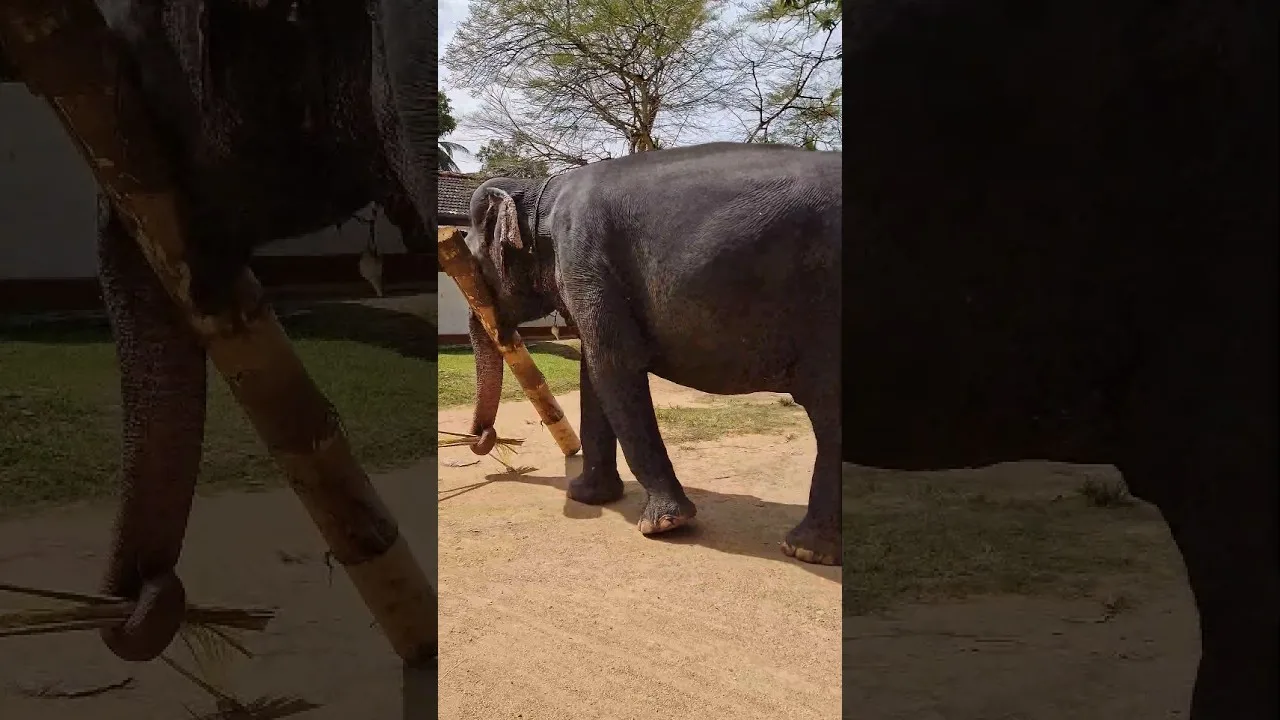
I was standing right next to this gentle giant when the mahout started telling me things I never knew. You know that Urdu saying about elephants having different teeth for showing and eating? Well, I saw it with my own eyes that day. The tusks we admire are just for display. The real eating happens with teeth hidden inside their mouth. I felt so small next to this beautiful creature. But also so lucky to learn its secrets.
Two Thousand Years of Royal Elephant Bonds
Sri Lanka has one of the largest populations of Asian elephants in the world. These elephants have been part of Sri Lankan culture for over 2000 years. Ancient Sinhalese kings used elephants in royal ceremonies and battles. The famous elephant Kandula carried King Dutugamunu into battle in the 2nd century BC. Sri Lankan elephants are different from African ones. They are smaller, have smaller ears, and only some males grow tusks. The British colonial period brought big changes. Many elephants were captured for work and export. Their numbers dropped fast. Today Sri Lanka has strong laws protecting wild elephants. The Pinnawala Elephant Orphanage, established in 1975, became famous for rescuing abandoned and injured baby elephants. It is one of the few places in the world where you can watch elephants bathing in a river up close. The mahouts here build lifelong bonds with the elephants they care for. Some have worked with the same elephant for 20 or 30 years. It is one of the most unique relationships between humans and animals anywhere on earth.
Why Sri Lanka's Elephants Changed My Perspective
Seeing an elephant up close changes you. These are not zoo animals behind glass. In Sri Lanka, you can watch them bathe in rivers, eat, and interact with their keepers in a way that feels completely natural. For nature lovers, this is a dream. Sri Lanka's Asian elephants are an endangered species. There are only around 6000 left in the wild across Asia. Every elephant you see here is precious. The things I learned about their biology were mind-blowing. Their teeth are replaced six times in their lifetime, not once like ours. Their tusks are actually extended upper teeth that never stop growing. Their large ears work like a cooling system, pumping blood through thin skin to release body heat. They can communicate with other elephants kilometres away using low-frequency sounds our ears cannot detect. Allah created these animals with so much detail. The more you learn, the more amazed you feel. It is a reminder of how extraordinary His creation truly is.
Did You Know? Elephants can hear other elephants calling from 10 kilometers away! Their huge ears are not just for cooling down. They work like satellite dishes catching sounds we cannot even imagine.
Best Months and What to Actually Pack
Best time to visit is between November and April when the weather is dry and pleasant. Download the PickMe app to get around Sri Lanka easily. It is the most reliable taxi app in the country. Wear comfortable clothes and closed shoes for elephant interactions. Bring a good camera. Go in the early morning when elephants are most active. Carry water and sunscreen. The mahouts are very knowledgeable, so ask them questions. They love talking about their elephants. Tip them if you can. They work hard every single day.