Millions visit Masjid Nabawi every year. Most walk in, offer salaam, pray in Riyadh ul Jannah and leave. Very few know what the designs on the Ottoman pillars mean, what lies behind the three layers of walls surrounding the blessed grave, why five mihrabs exist inside one mosque, or which landmarks within ten minutes of walking are connected to the earliest events of Islam. This is a four-part guide compiled from on-ground research and video documentation, every fact here is something the average visitor walks past without realising.
1,400 Years of Expansion: Reading the Mosque Like a Map
The mosque you walk into today is not one building, it is six centuries of construction layered on top of each other. Once you understand which era each section belongs to, the entire interior becomes readable. The Ottoman-era designs on the pillars are not decorative. They were placed deliberately to mark historical locations — to preserve the memory of events without creating anything that would distract worshippers from their prayer.
The First Mosque
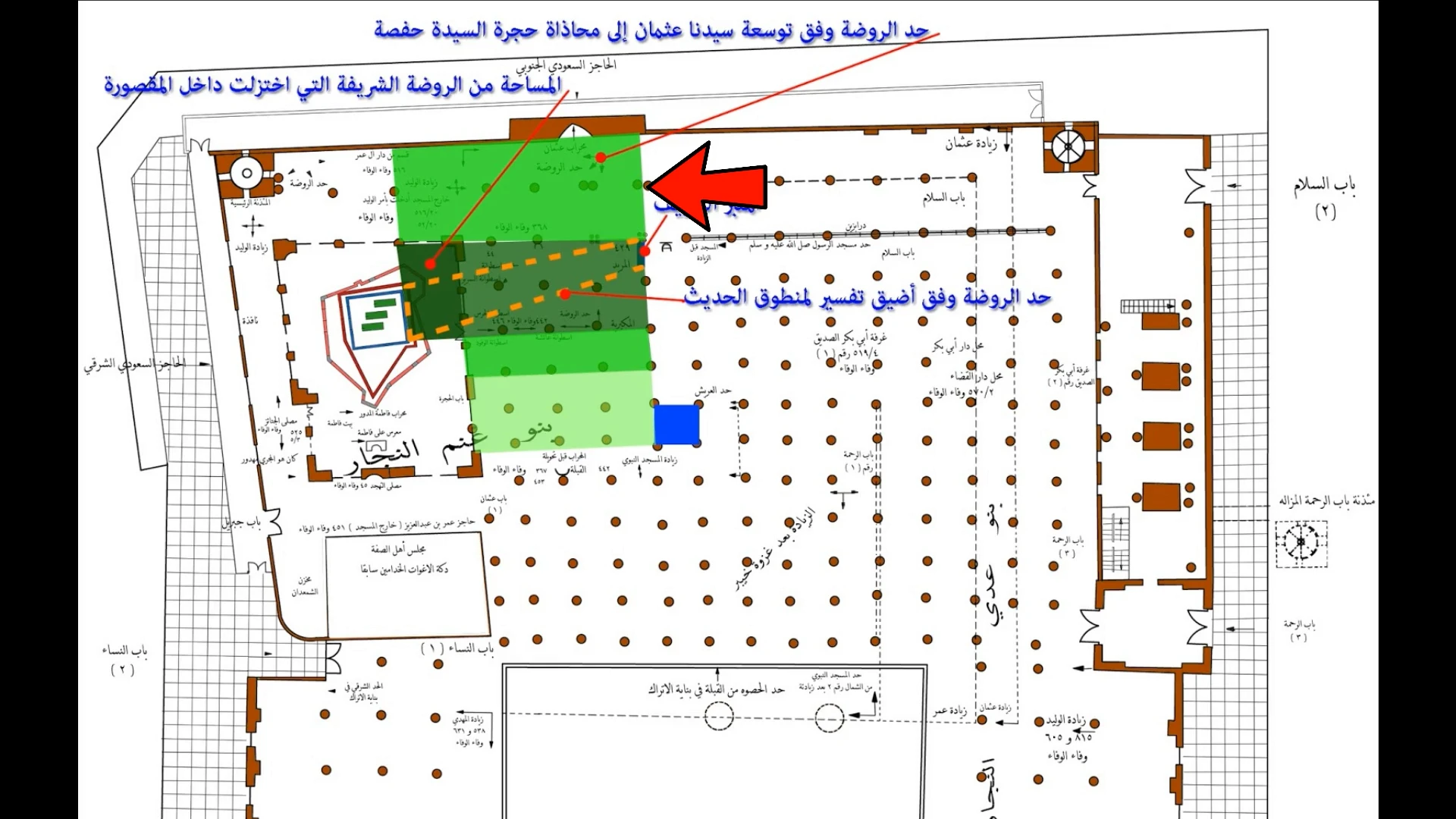
When the Prophet ﷺ arrived in Madinah from Mecca, he stayed at the home of Hazrat Abu Ayyub Ansari RA. The mosque was then built on a small piece of land that had belonged to two orphans, close to where the camel knelt. At that time, the qibla faced Bait ul Muqaddas in Jerusalem — the direction would only change to Mecca later. Hazrat Aisha RA's and Hazrat Fatima RA's rooms were attached directly to the mosque wall.
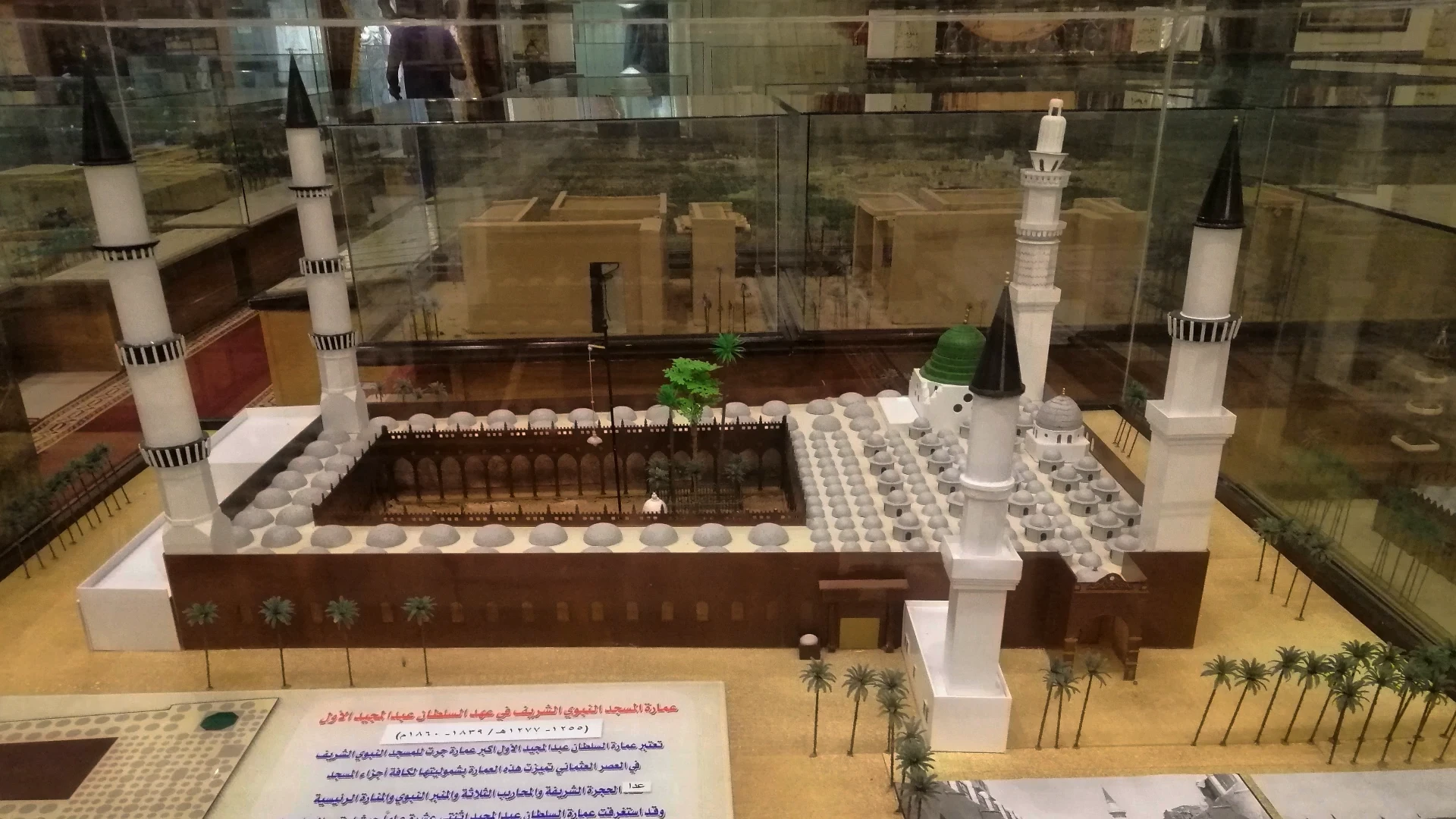
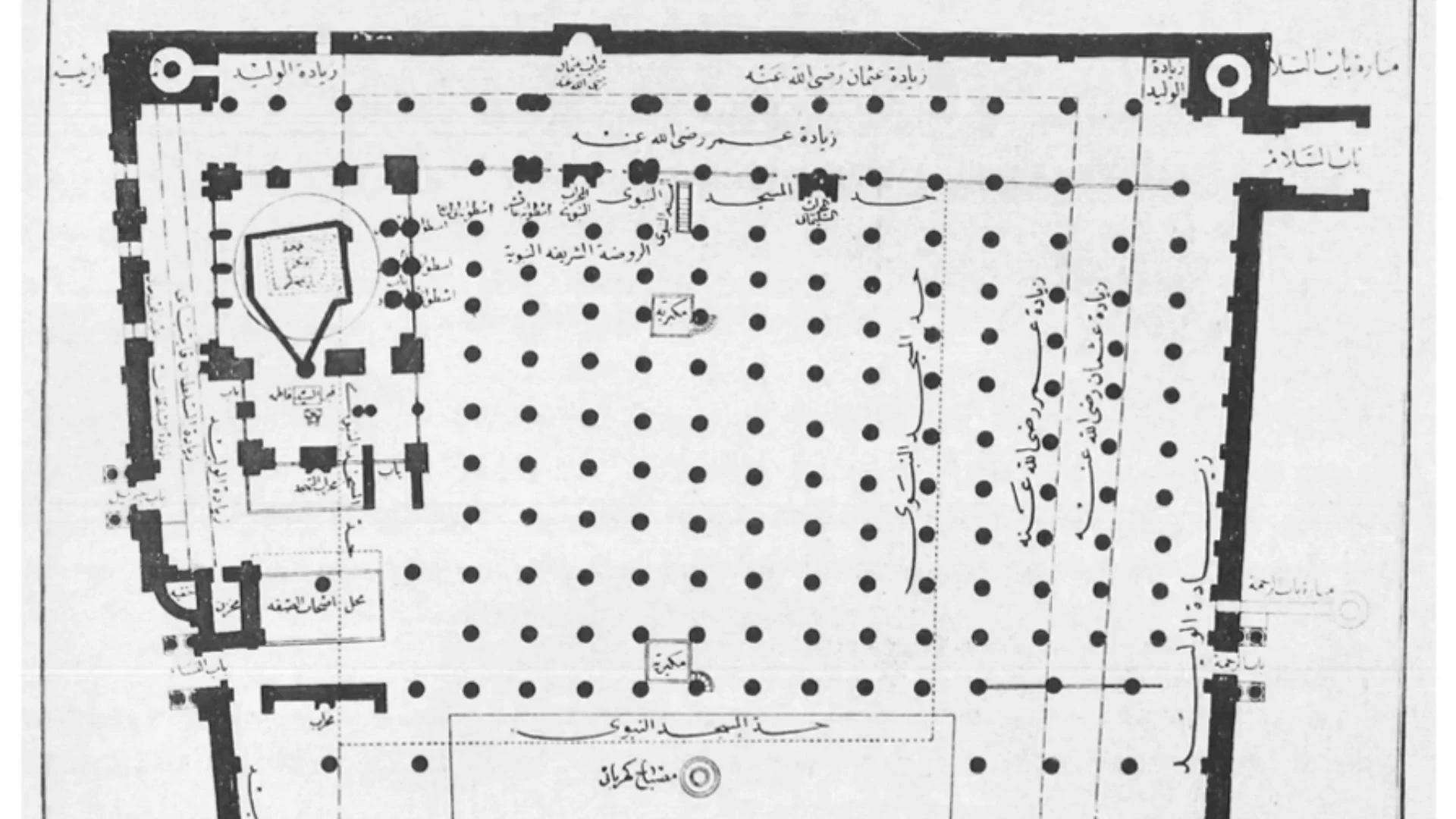
Era by Era
Prophet's ﷺ Era
The original small mosque. The boundary of this era can still be traced today, it runs along the first set of plain pillars near the Rawdah. The area inside was the entire world of early Islam.
Umar RA Expansion
Extended from three sides. Bab us Salam was added during this period and still carries that name today. The qibla wall moved. The Suffah platform was removed as space was no longer needed.
Uthman RA Expansion
A major expansion. The boundary of Uthman RA's mosque is marked by a specific pillar, from that pillar to the qibla wall was his haram. The design on pillars changes noticeably at this boundary.
Umayyad Era, Walid ibn Abdul Malik
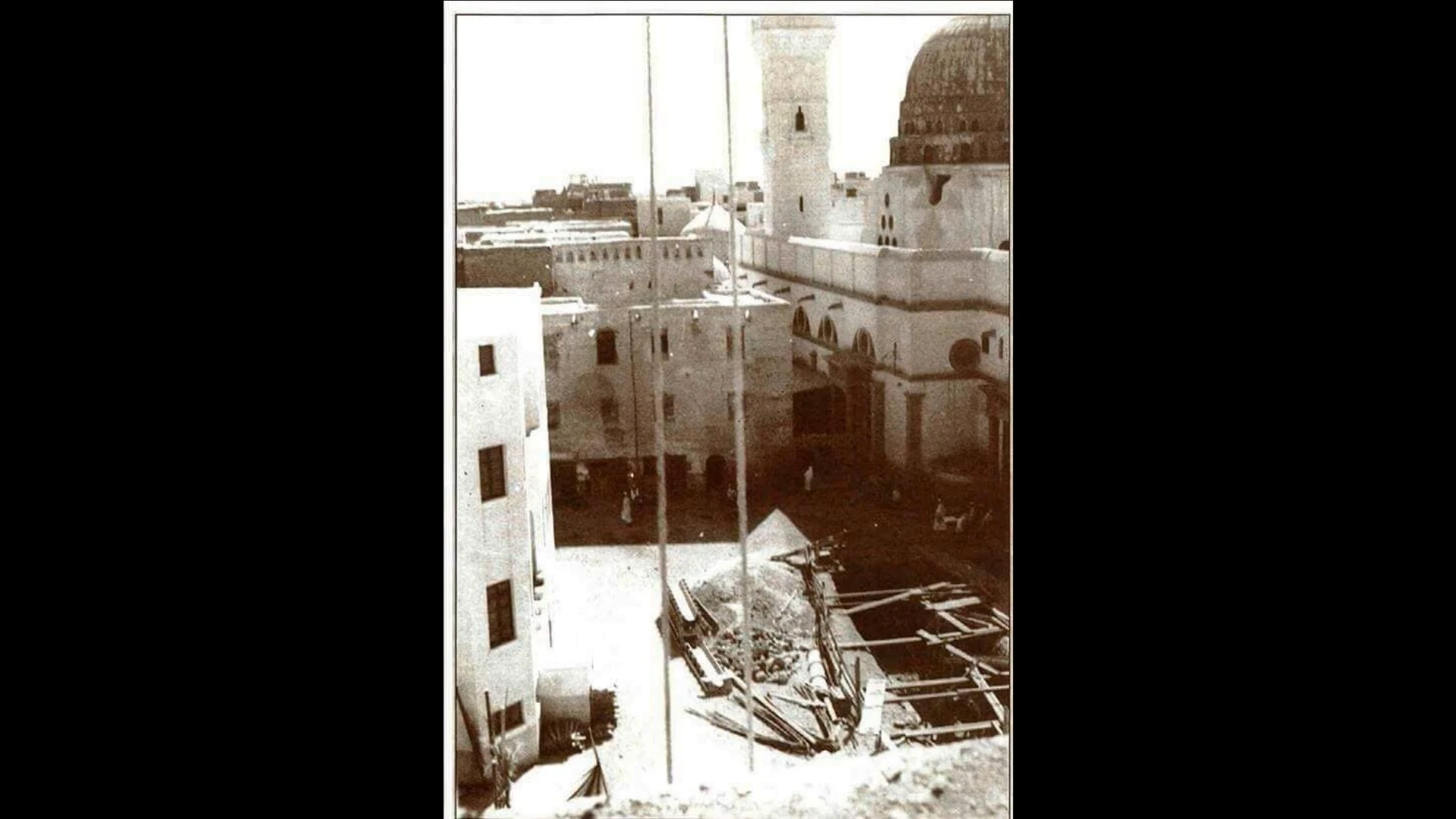
For the first time, Hazrat Aisha RA's room (the hujra where the Prophet ﷺ is buried) was incorporated into the mosque. The ceiling over that section was raised. A temporary wooden structure was placed over the grave.
Ottoman Era, Sultan Abdul Majeed
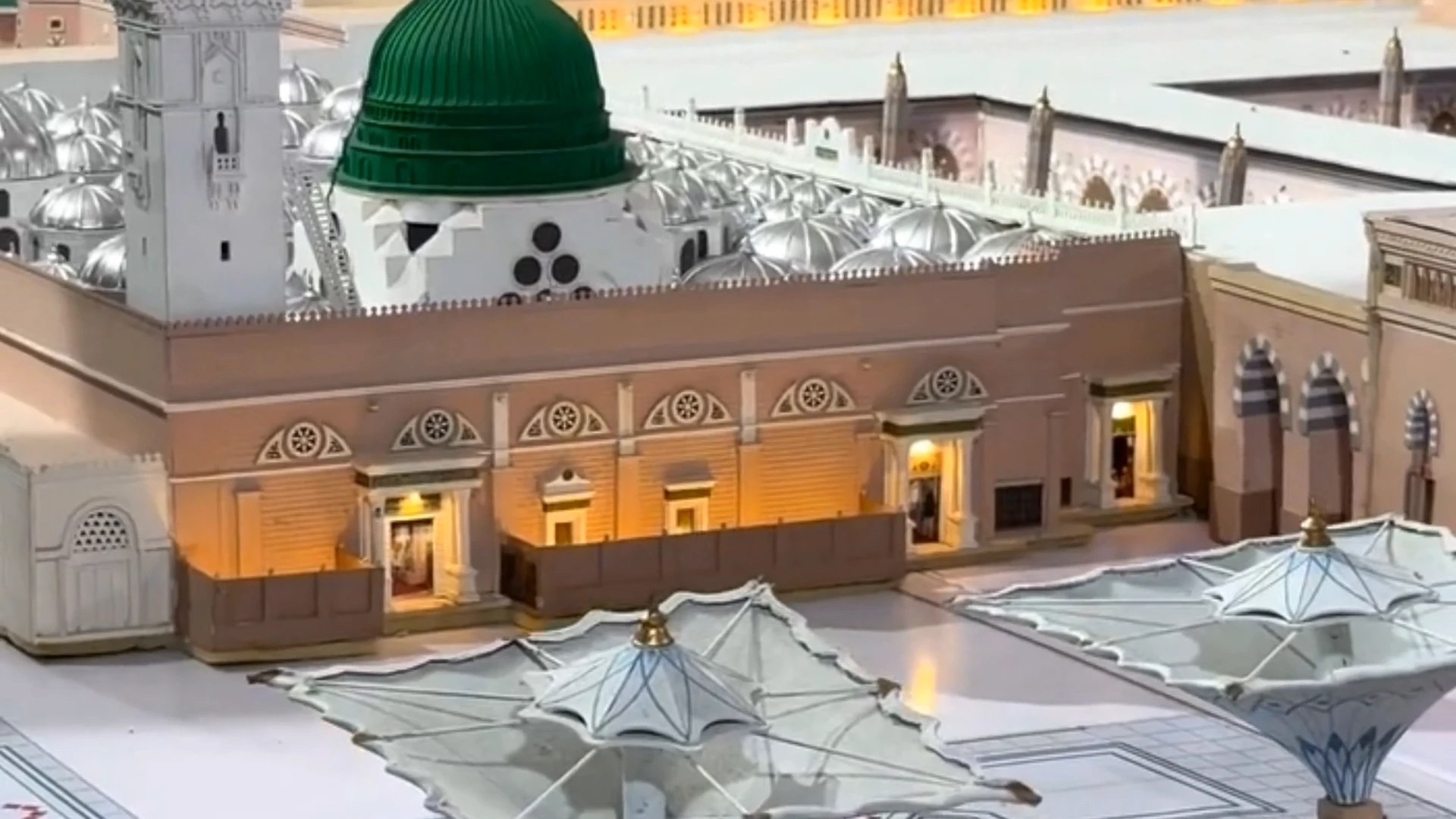
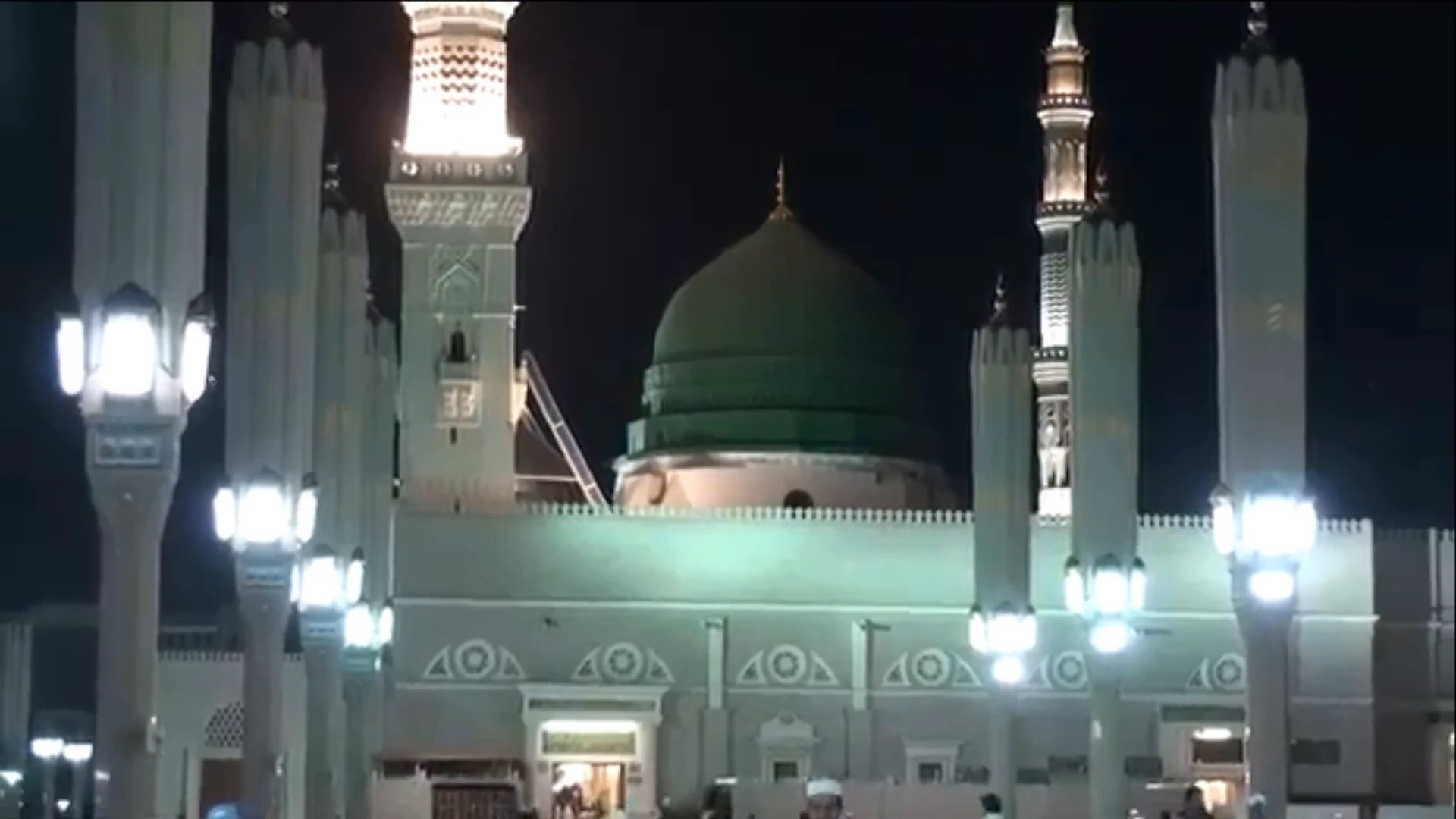
The entire front section of the mosque visible today, what we call the "old haram", was built by Ottoman Caliph Abdul Majeed. The current Green Dome was constructed during his reign. The stone dome inside is even older and still intact, hidden behind layers of curtains and walls.
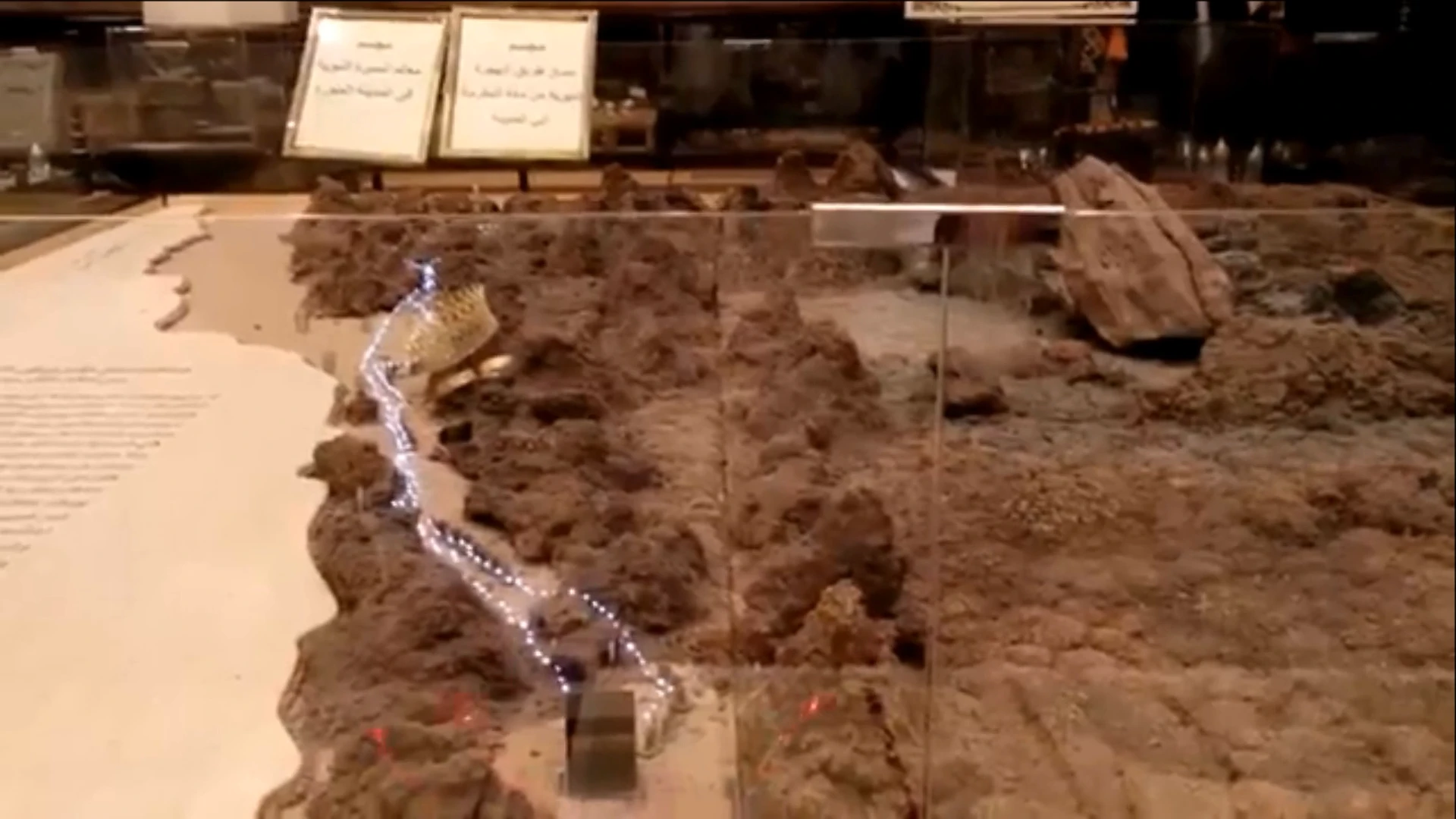
If you want to see all of this visually, visit the Dar al-Madinah Museum near the mosque. It has 3D scale models of every expansion era with animations, all accessible in Urdu. Touch screens let you click on each area and get the history. It is one of the most underrated stops in all of Madinah.
How to Read the Mosque Interior
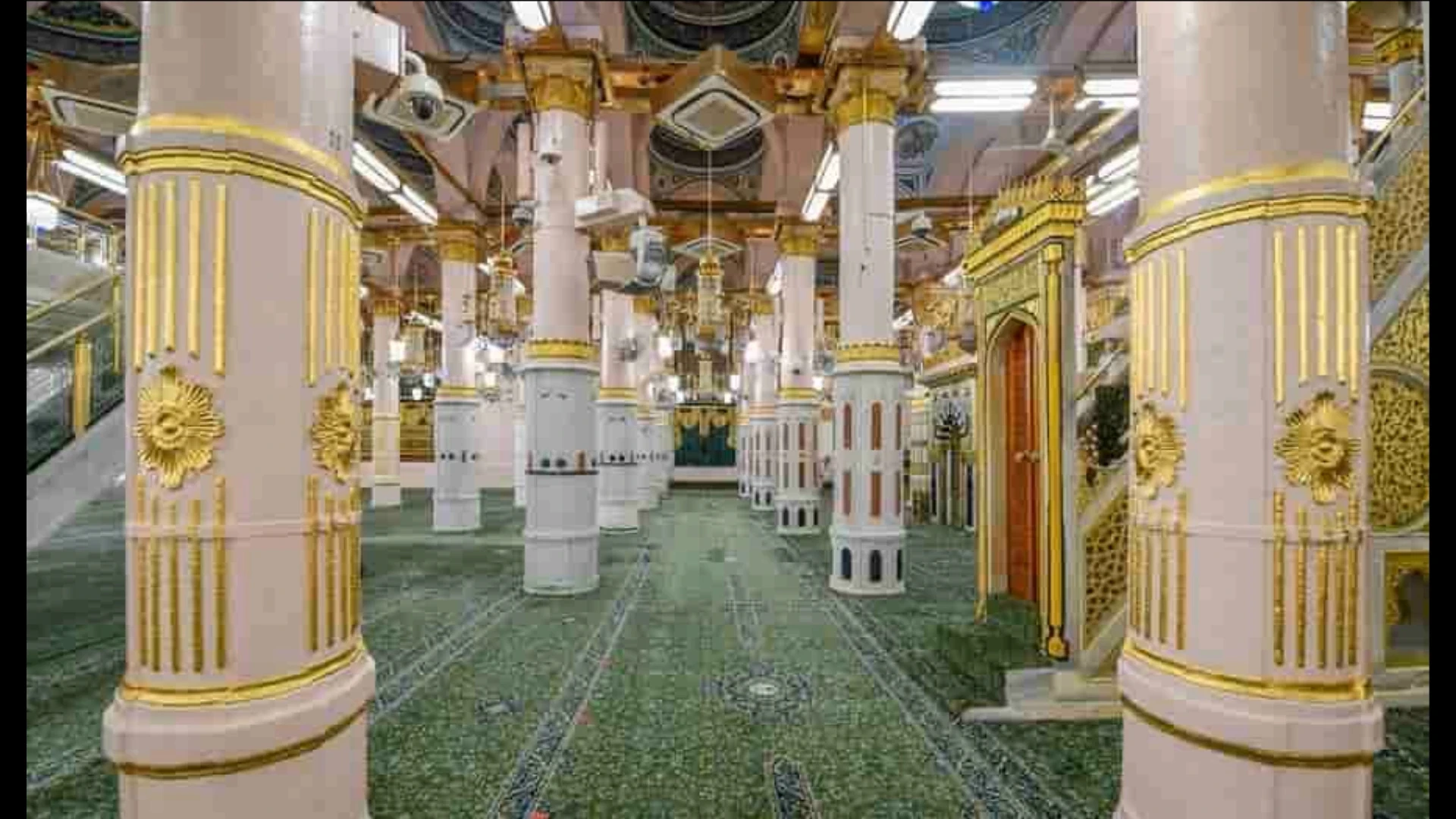
Walk from Bab us Salam toward Bab ul Baqi, the path every visitor takes to offer salaam. As you move, watch the pillars. When the design on the pillars changes from plain to one with leaf-like ornamentation, you have crossed from the Prophet's ﷺ era into the expanded area. Look up at the left wall, you will see two distinct marks at different heights. The lower mark shows the original height of the Prophet's ﷺ era mosque. The higher mark shows the height after Umayyad expansion. These are permanent historical markers that almost no one notices.
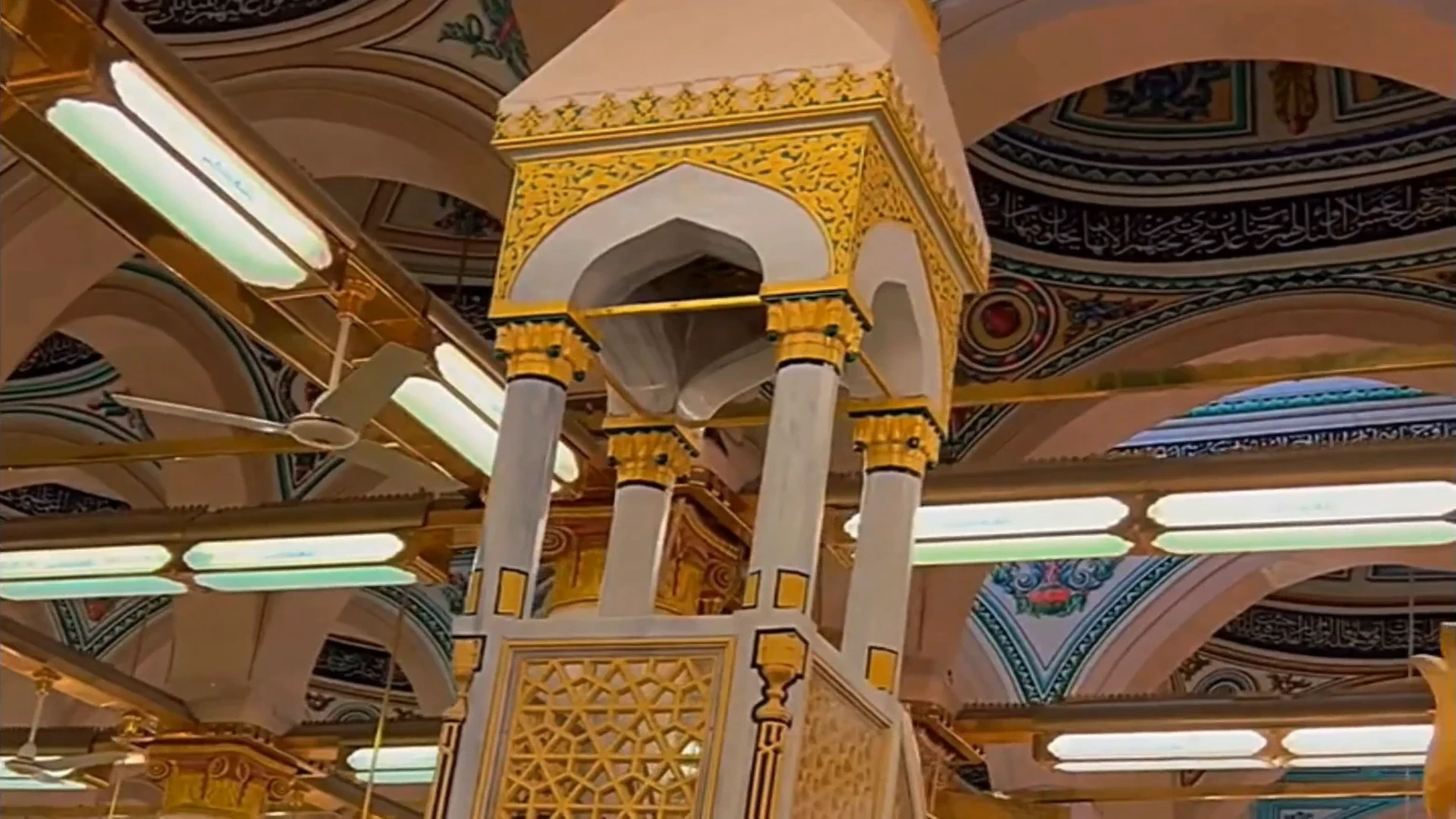
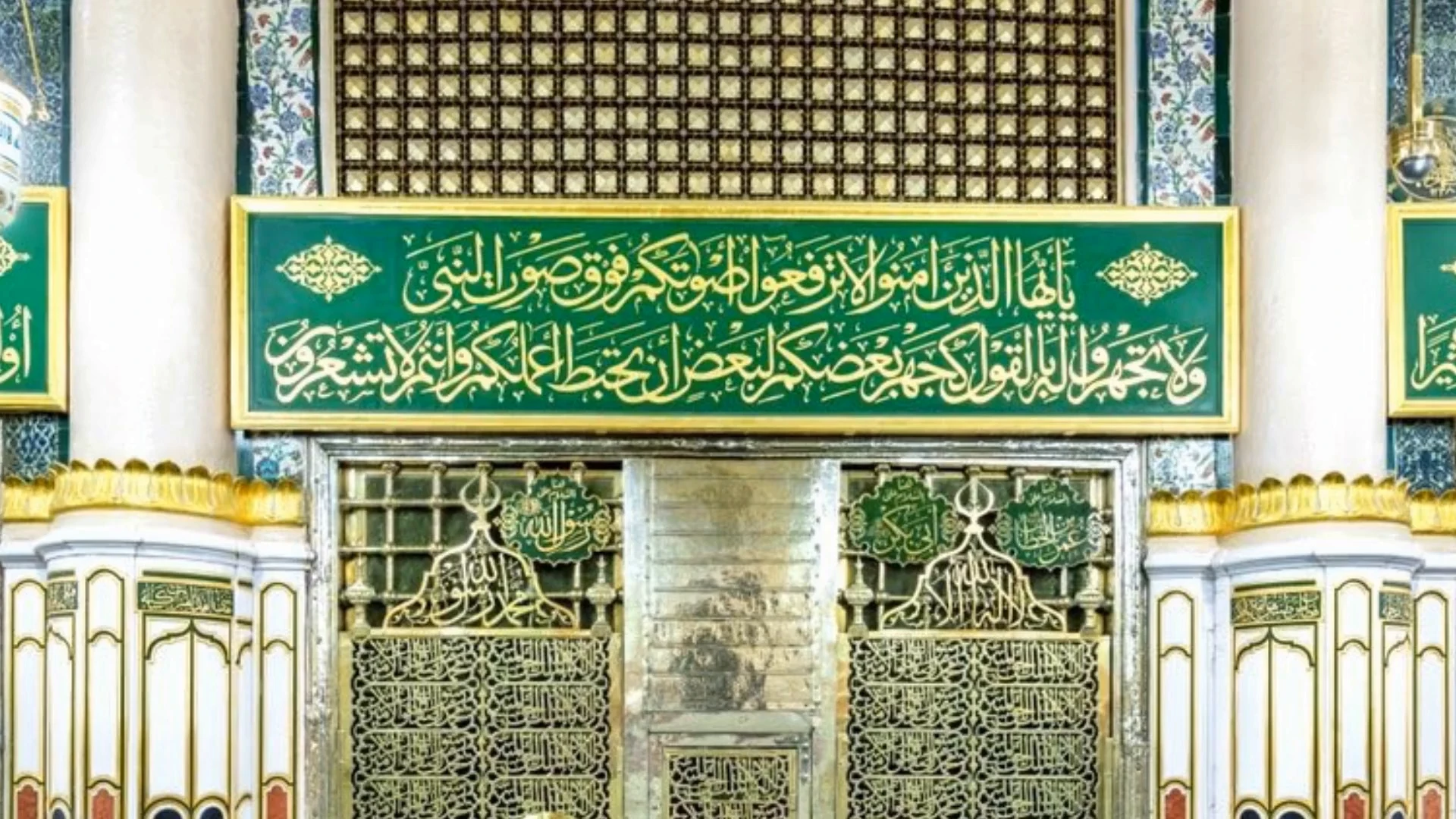
The Five Mihrabs
Most mosques have one mihrab. Masjid Nabawi has five, each with a different history and significance.
Mehrab an-Nabawi
The main mihrab where the Prophet ﷺ led prayers. This is the primary mihrab still in use for congregational prayer.
Mehrab Uthmani
Where Hazrat Uthman RA led prayers after the expansion. Located slightly to the right as you face the qibla. Identified by golden-coloured pillars directly behind it.
Mehrab Sulaimani
Built by a later ruler, no direct prophetic history. Often confused with Mehrab an-Nabawi. The key difference: Arabic text on the right side of Mehrab Sulaimani reads "This is the prayer spot of the Prophet ﷺ." Mehrab an-Nabawi has no such inscription because it is the original.
Mehrab Fatima
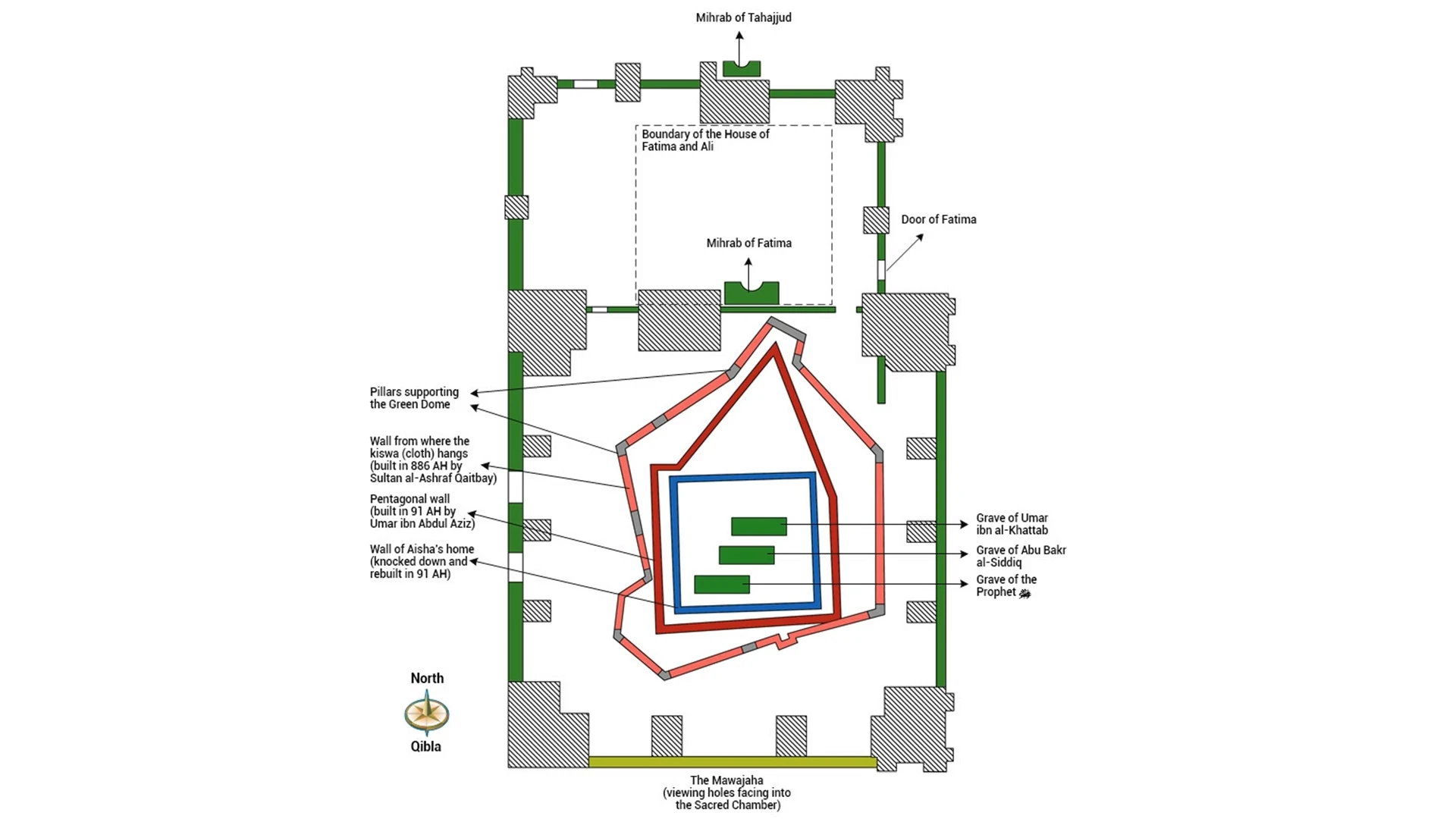
Inside the Rawdah chamber itself, visible through the jali. Only seen by those who can access Bab-e-Fatima. This is the fourth mihrab.
Mehrab Tahajjud
Also inside the chamber, associated with the night prayers of the Prophet ﷺ. Visible on the diagram of the Rawdah structure that researchers have published.
Inside the Rawdah: What Lies Beyond the Jali
When you stand at the jali to offer salaam, most people assume the grave is directly in front of them. In reality, there are multiple barriers between the visitor and the blessed resting place — each added at a different point in history for specific reasons. Understanding these layers completely changes how you experience that moment.
The Layers Between You and the Rawdah
As you stand at the jali and face it, what you are actually looking at is:
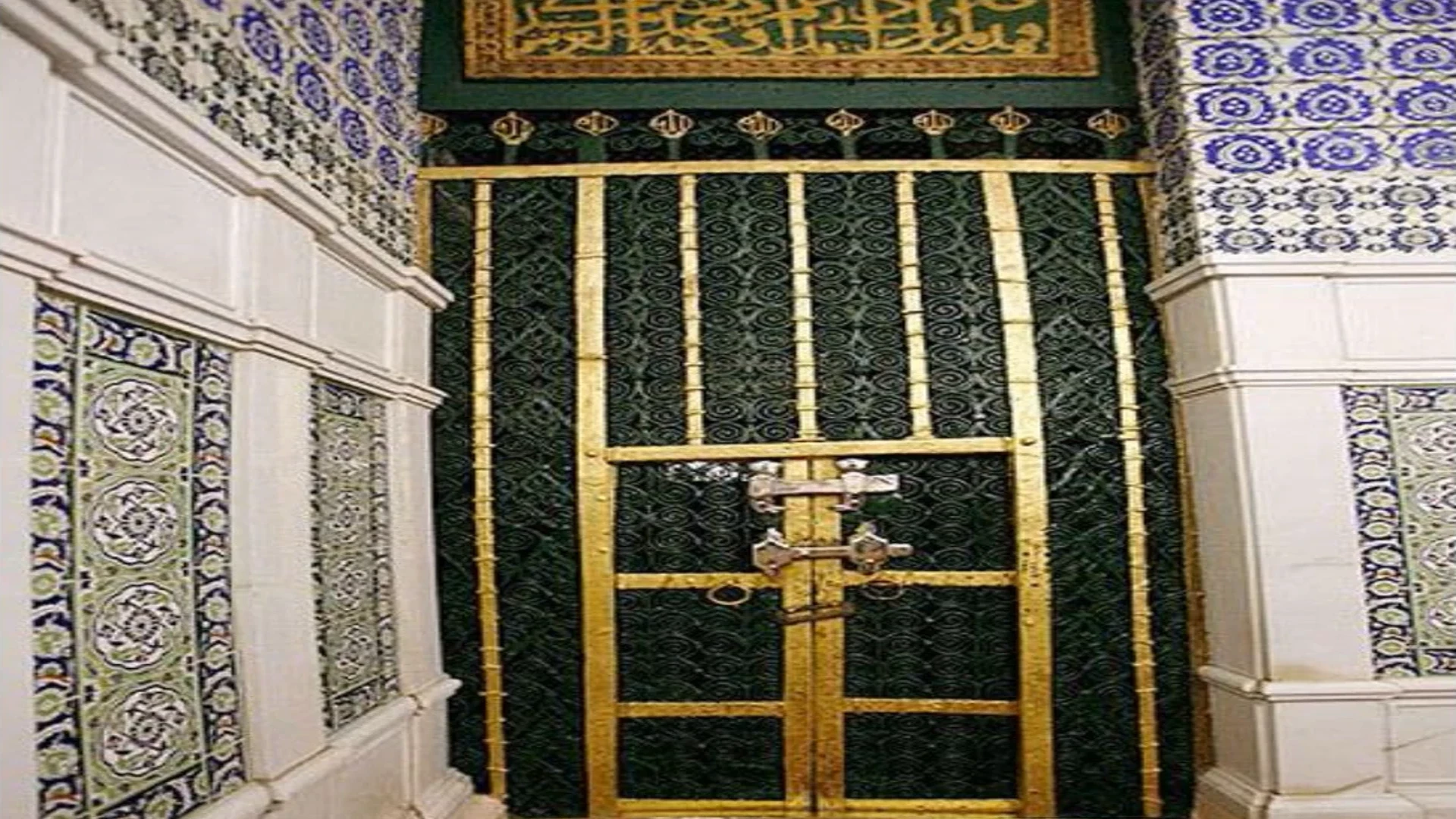
- The jali (grille), the golden lattice you can see and touch
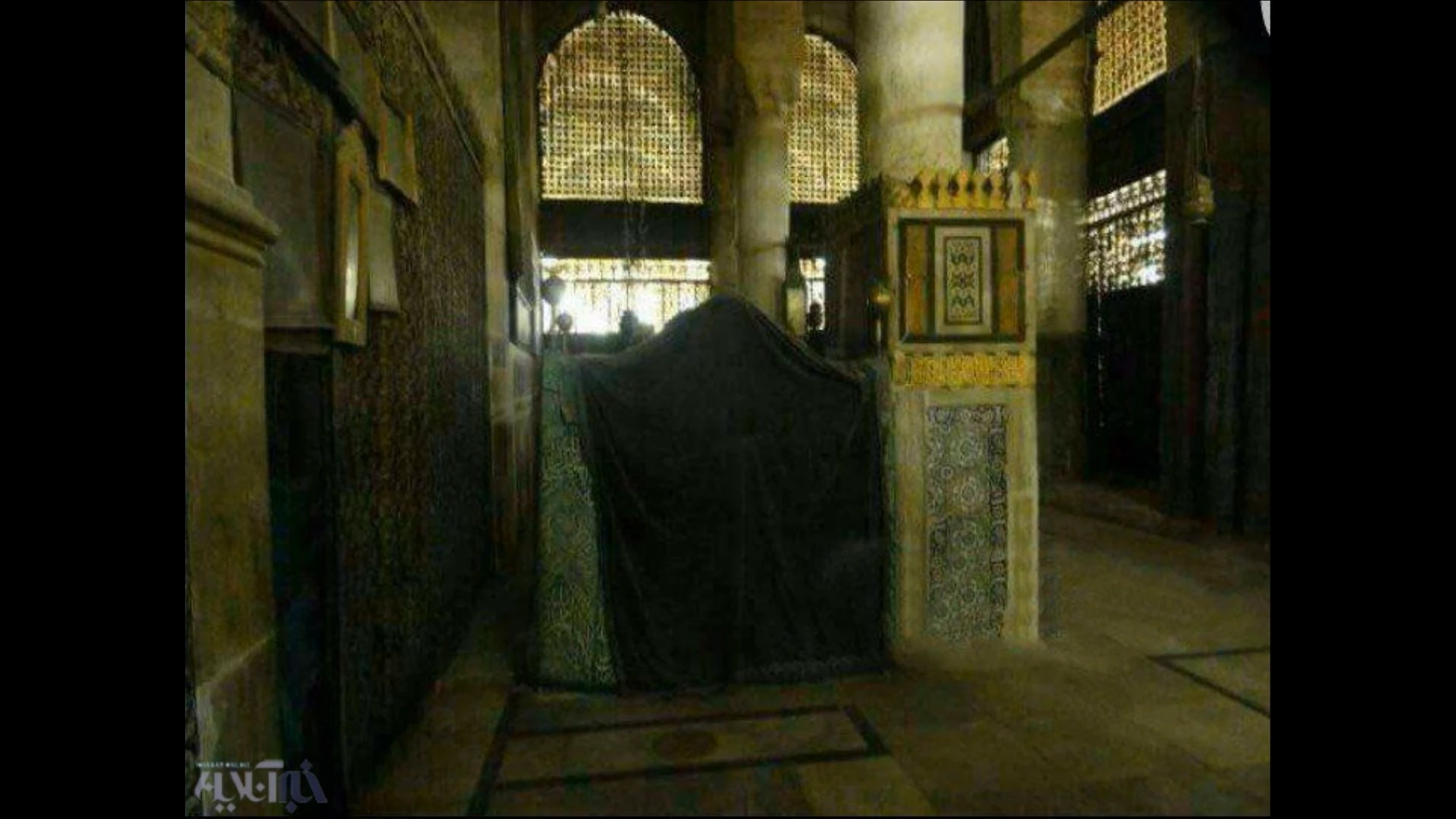
- Black curtain (hijab), sometimes drawn, sometimes open
- Green curtain, a permanent inner veil
- First wall, built by the Umayyad Caliph Walid ibn Abdul Malik when the chamber was first enclosed
- Pentagonal outer wall, built by Umar ibn Abdul Aziz RA in a five-sided shape specifically so it would not resemble the Kaaba
- The actual blessed graves, of the Prophet ﷺ, Hazrat Abu Bakr RA and Hazrat Umar RA
The Last Person to Enter
No one has physically entered the chamber for approximately 550 to 600 years. The last documented entry was by a scholar named Ali ibn Ahmad al-Samhudi, who went in during a major repair after a fire gutted the mosque's roof and walls. He described seeing three graves slightly raised from the ground with pebbles placed over them to keep the soil in place. After the repairs were completed, the chamber was sealed and has not been opened since.
Claims circulating on social media, that a particular family regularly enters to clean the chamber — have been explicitly denied by the Saudi government. No one has entered since that repair, and the Saudi authorities confirm this.
If the black curtain is open, you will see three raised markers through the grille. The middle one, marked by a slightly raised position, is directly above the Prophet's ﷺ grave. The two flanking markers are Hazrat Abu Bakr RA and Hazrat Umar RA. Above the graves, on the jali itself, are two arched medallions inscribed with La ilaha illallah Muhammadur Rasulullah.
Bab-e-Fatima
After offering salaam, if you continue forward toward the left, you will pass a small open space — this was once the location of Hazrat Fatima RA's home, whose door is still preserved in the same wall. Bab-e-Fatima is the only entrance into the area beyond the jali. It is opened only for authorised personnel, never for general visitors. Some videos online claiming to show the interior were filmed during that last repair entry and have been misrepresented as recent.
Saqifa Bani Sa'idah
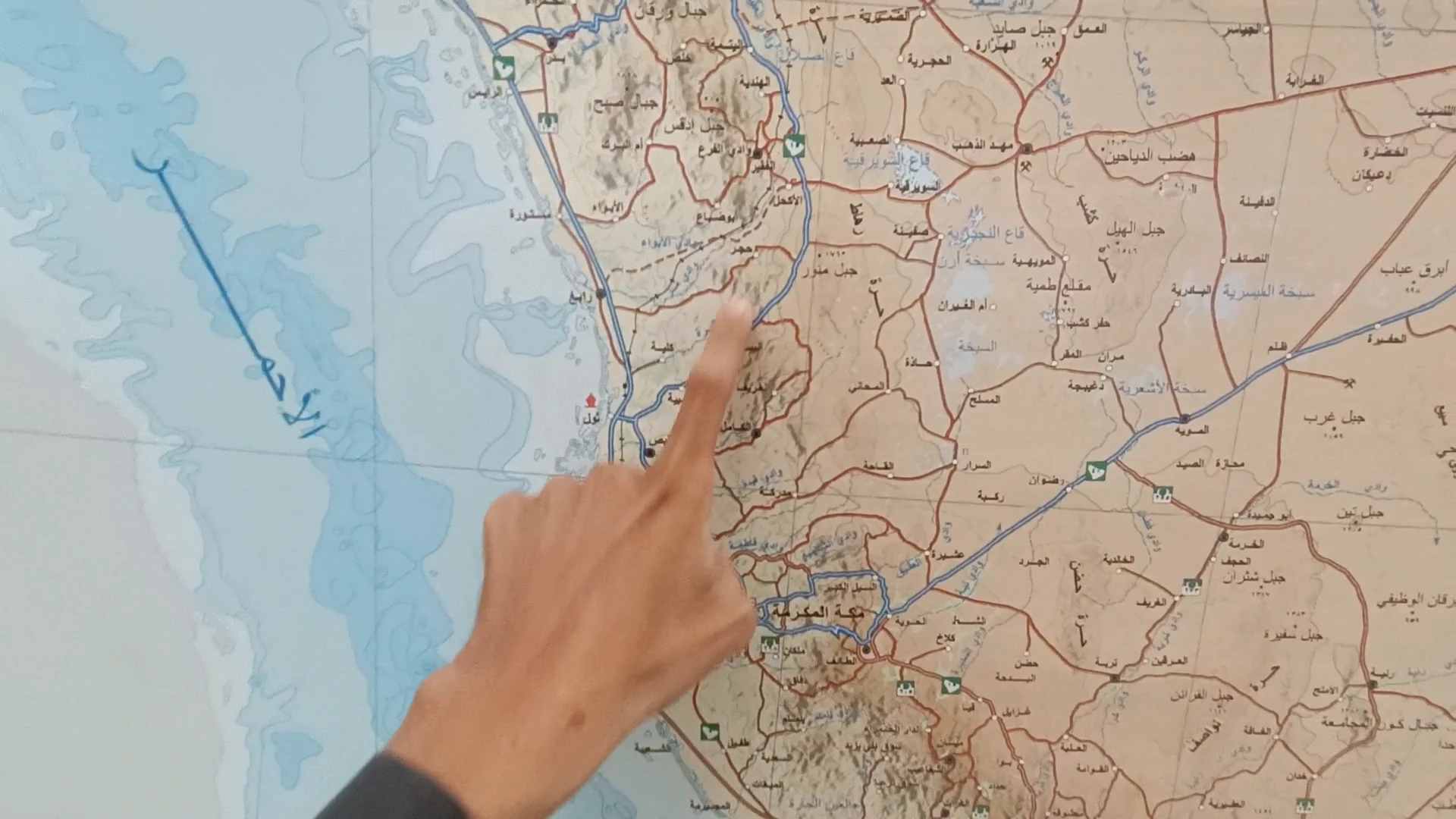
Standing at Gate 14 (the third corner of Masjid Nabawi when exiting through the courtyard), look out toward the small structure across the road. That is the site of Saqifa Bani Sa'idah — the location where Hazrat Abu Bakr RA's caliphate was decided by the companions after the Prophet's ﷺ passing. It is one of the most historically significant spots in all of Madinah and sits within a few metres of the mosque wall.
Hidden Facts: The Green Dome, Sacred Pillars and Common Misconceptions
Social media has produced many confident claims about Masjid Nabawi, most of them wrong. This section corrects the most widespread ones and replaces them with what the historical record actually shows.
The Green Dome Is Not One Layer
The dome that appears green from outside is actually the outermost of three layers:
- Innermost: The original stone dome, still intact. It cannot be seen because it sits behind the inner walls and curtains of the Rawdah.
- Middle: A wooden dome, added approximately 650 years after the Hijra, the first time anything was placed over the graves.
- Outermost: The current Green Dome, built by Ottoman Caliph Sultan Abdul Majeed. The green colour was added later. The silver structure visible from the mosque's main courtyard and exterior is a separate section that sits over the area where Hazrat Aisha RA and Hazrat Fatima RA's rooms once stood, not directly over the graves.
The Sacred Pillars
Ustuwanah al-Mukhallafa, The Fragrance Pillar
A column near the Rawdah area, identifiable by the board on its right side that reads: "This is a confirmed place of prayer of the Prophet ﷺ." The pillar carries the name al-Mukhallafa (fragrance) because the Prophet ﷺ would regularly apply perfume here before prayer. The marble now covers the original spot but the location is preserved.
Ustuwanah Hannana, The Crying Trunk
When the Minbar (pulpit) was built and the Prophet ﷺ began delivering khutbah from it, he left the date palm trunk he had previously leaned against. That trunk began to weep, an audible sound that everyone in the mosque heard. The Prophet ﷺ descended from the Minbar, placed his hand on the trunk, and it calmed. This pillar marks that exact location.
Ustuwanah Abu Lubabah, The Repentance Pillar
During the Battle of Khandaq, Hazrat Abu Lubabah RA revealed tactical information to the Jewish tribe Banu Qurayzah, then immediately regretted it. Overcome with guilt, he walked to the mosque and tied himself to this pillar, vowing not to leave until Allah accepted his repentance. He remained for several days until a Quranic verse was revealed confirming his tawbah was accepted.
The Minbar, Three Locations
Most visitors assume the current Minbar is where it always stood. It is not. The Minbar's position has changed three times across different expansion eras as the orientation and structure of the mosque changed. The current position corresponds to the expanded Ottoman mosque, not the original.
The Suffah was a raised shaded platform inside the original mosque where the poorest companions lived, men who had no family or home in Madinah. They dedicated themselves entirely to learning from the Prophet ﷺ. Many popular YouTube videos show the wrong location for the Suffah. In the original mosque layout, the Suffah occupied a very small area at the back, most of what people point to today was already outside the first mosque's walls.
Riyadh ul Jannah, The Garden of Paradise
The Prophet ﷺ said: "Between my house and my Minbar is a garden from the gardens of Paradise." Riyadh ul Jannah is that exact space, marked today by white marble and a distinctive carpet pattern. The boundary is where the pillar design changes: from the plain pillars of the older section to the ornate leaf-patterned ones of the expanded area. When you cross that threshold, you have entered the space the Prophet ﷺ described.
Walking Beyond the Mosque: What Is Within Reach
Madinah rewards the visitor who walks. Within ten to fifteen minutes on foot from Masjid Nabawi are landmarks tied directly to the earliest events of Islam, most of them almost completely unknown to first-time visitors and absent from standard tour itineraries.
Landmarks Around the Mosque
Abu Ayyub Ansari RA's House
The Prophet ﷺ stayed here when he first arrived in Madinah, before the mosque was built. The location falls within what is now the mosque complex, a small marker and board identify the spot near the current structure. Bab us Sunna (the Door of Sunnah) on the mosque's exterior preserves the memory of this connection.
Library Inside the Mosque, Old Qur'ans
Few visitors know that the mosque contains two libraries. One sits near the area associated with Hazrat Uthman RA, accessible via a short staircase. It holds old copies of the Qur'an and historical manuscripts. Entry is open. Ask any guard near Gate 4 or 5 to direct you.
Bir Rumah, The Well of Talha RA
When the Quranic verse was revealed,"You will never attain righteousness until you spend from what you love", Hazrat Talha ibn Ubaydullah RA immediately donated his most prized garden, which contained a well with the sweetest water in Madinah. The Prophet ﷺ used to visit it and drink from it. Several historic wells in Madinah have been restored and mapped, Bir Rumah is among the most significant.
Masjid Imam Bukhari
A small mosque near the fourth corner of Masjid Nabawi marks the spot where Imam al-Bukhari, the compiler of the most authentic hadith collection in Islamic history, stayed when he visited Madinah. A brief walk brings you there.
Masjid Ghamama, The Eid Prayer Mosque
The Prophet ﷺ used to walk from the mosque to this open ground to offer Eid prayer. It is recorded in Sahih Muslim. The mosque that now stands here is one of the oldest surviving mosques in Madinah. It is most beautiful at night when fully illuminated. A five-minute walk from Bab us Salam.
Masjid Ali, Masjid Umar, Masjid Bilal
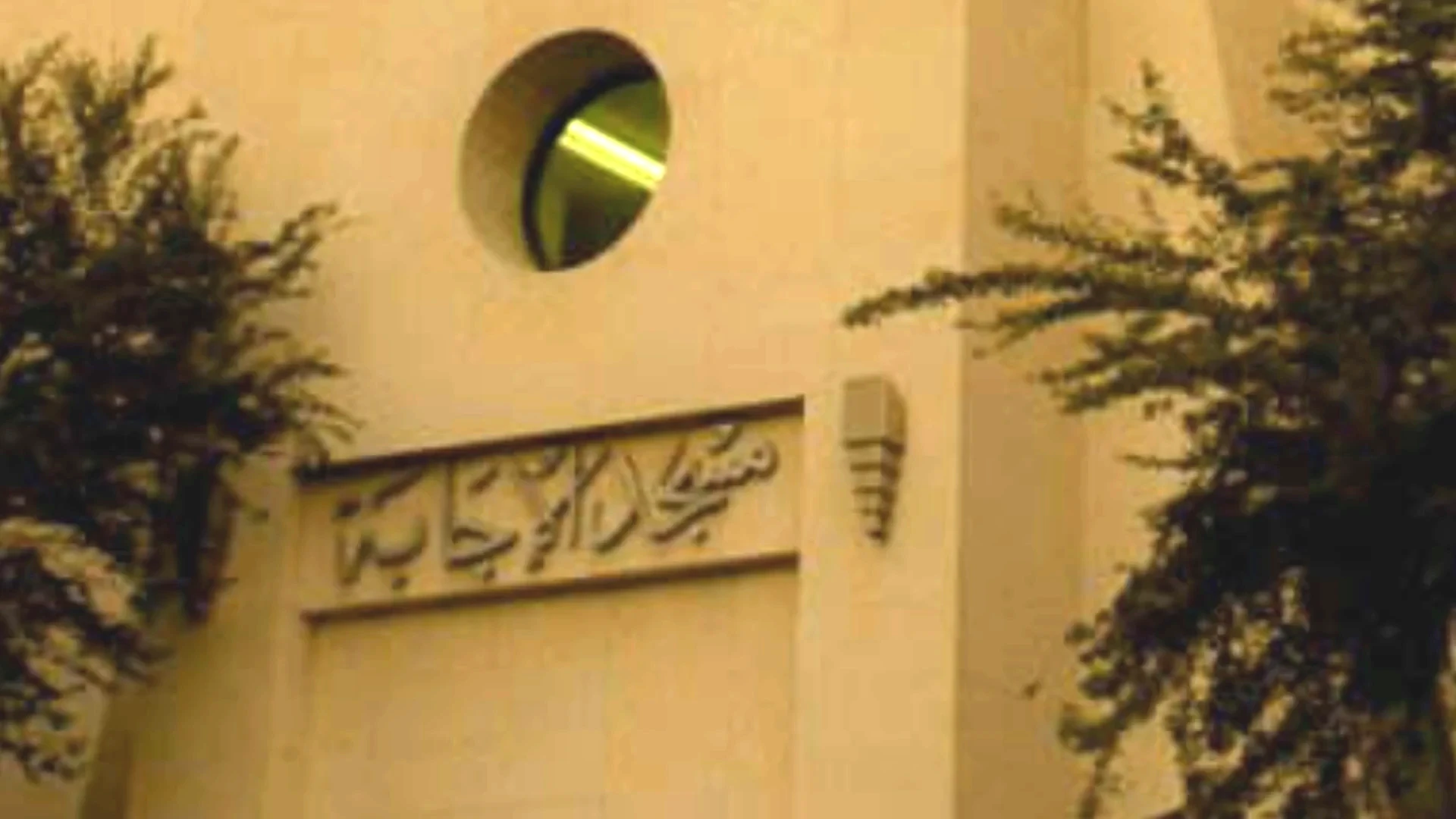
Three small mosques clustered together near Bab Jibreel and Bab Bilal, all marking locations associated with specific companions. They are accessible, open to visitors and take only a few minutes to visit. Most tour groups completely bypass them.
Bab ur Rahmah, The Ceiling Painting
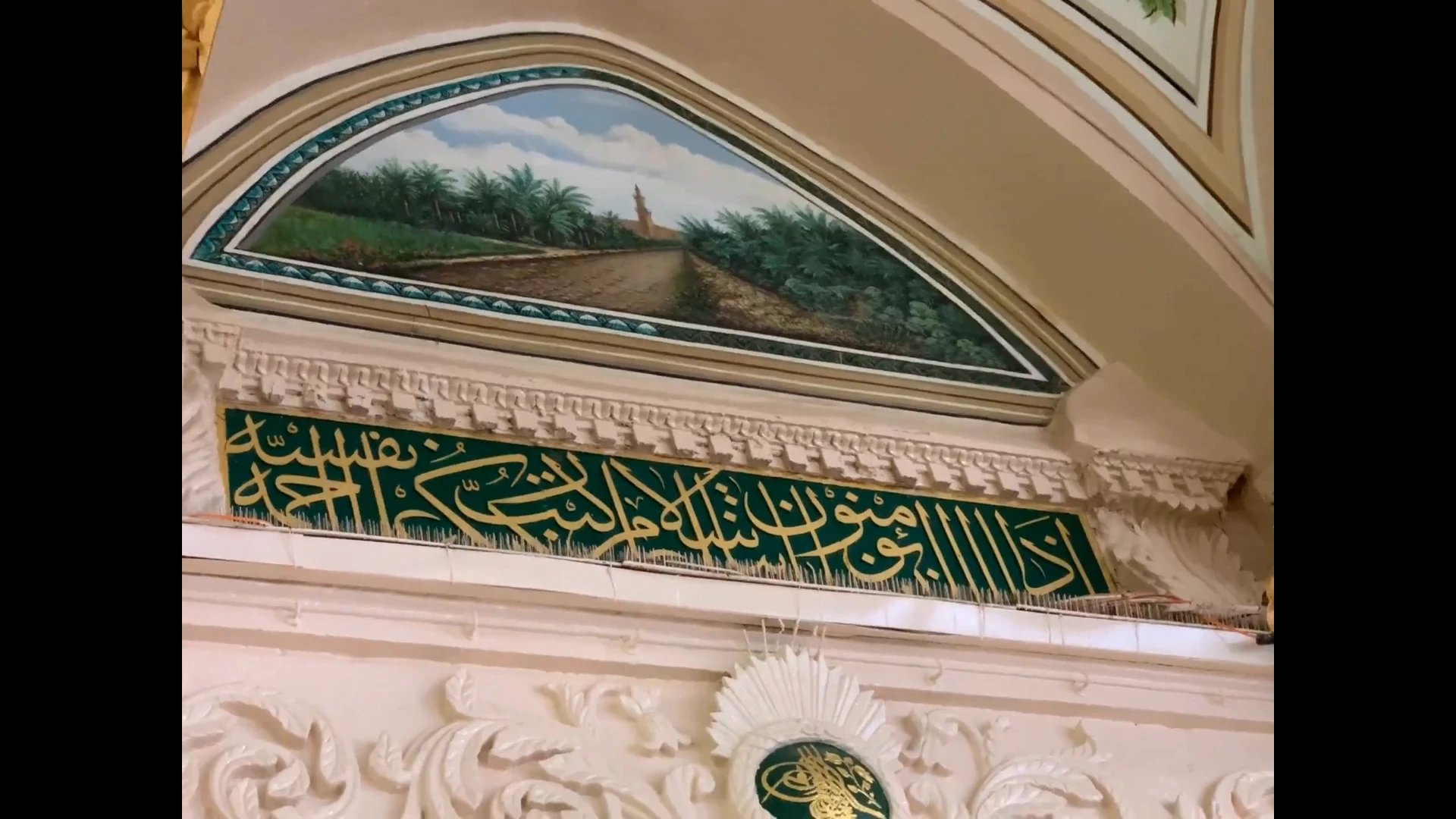
Enter through Bab ur Rahmah (The Door of Mercy) and look up. The arch above the doorway contains one of the only surviving figurative landscape paintings inside the mosque, a depiction of a distant horizon with a historic scene. It is a remarkable survival of Ottoman artistic tradition inside a mosque. Very few visitors ever look up.
Masjid Qiblatain,3 km Away
The mosque where the qibla direction changed mid-prayer from Jerusalem to Mecca. This is documented in Sahih Muslim. The Prophet ﷺ was leading prayer when the revelation came; he turned mid-rakah and the congregation followed. The original dual-mihrab layout, one facing each direction, has been restored. Taxis from near "Pakistan Pigeon Square" (Chowk) run early Fajr ziyarat routes covering Qiblatain, Khandaq battlefield, Ameer Hamza RA's grave and Masjid Quba from around 4,000 PKR equivalent.
- Salaam at the Rawdah is only possible via Bab us Salam → Bab ul Baqi route. Enter from Bab us Salam.
- Women have dedicated visiting hours for the Rawdah area, check with the mosque administration on arrival.
- The Dar al-Madinah Museum is free, air-conditioned and has English, Arabic and Urdu guides on its touch screens.
- Riyadh ul Jannah gets extremely crowded after Fajr and Isha. The quietest window is between Zuhr and Asr.
- Masjid Ghamama is best visited at night, it is illuminated and nearly empty after Isha.
- Ziyarat taxis leave from near the pigeon chowk (Pakistani community area) early after Fajr, cheapest option for covering all sites in one morning.
- Jannat ul Baqi is closed most of the day. Men can enter briefly after certain prayers, timings change seasonally.
A Final Note
Madinah is not a city that reveals itself in one visit. Every corner carries the weight of events that shaped fourteen centuries of history. The mosque was not built all at once, it grew through grief, conquest, fire and faith. The grave it holds has not been opened for six centuries. The pillar a companion tied himself to in repentance still stands where it always stood.
None of this knowledge makes the experience more spiritual on its own. But it does make the visit impossible to spend mindlessly. When you know what you are looking at, every step inside that mosque becomes a conversation with history.
If you found any of this useful, share the videos with someone planning a trip to Madinah. And please keep Salman in your duas, the full four-part series took considerable research to put together.